
You may have watched an episode of CSI or a similar crime drama where a technician sits at a computer, clicks a few buttons and suddenly produces crystal-clear conversation from what originally sounded like noise and muffled speech.
It makes for good television, but real-world audio forensics does not work that way. Software can be extremely powerful, but it cannot recreate information that was never adequately captured in the original recording.
What can audio forensics actually do?
Most examinations fall into three broad areas: audio enhancement, audio authentication and voice or speaker comparison. Some cases involve only one of these, while others require a combination.
Audio Enhancement
Audio enhancement is used when relevant speech or another sound is present in a recording but difficult to hear because of background noise, recording distance, room reverberation, competing voices, music, mechanical noise or limitations of the recording device.
The objective is not simply to make everything louder. Processing is selected according to the obstruction and the information that needs to be heard. In some recordings, reducing steady noise or emphasizing certain parts of the spectrum can substantially improve intelligibility. In others, the useful information may already be too heavily masked or degraded.
Our Dialogue & Audio Enhancement service covers the evaluation and controlled processing of difficult recordings where speech or other relevant sounds need to be clarified.
Audio Authentication
Audio authentication addresses a different question. Instead of asking whether something can be heard more clearly, the objective is to examine whether a recording is technically consistent with the way it is represented and whether there are indications of editing, processing, discontinuities or other modifications.
An examination may include waveform and spectral analysis, file structure, encoding characteristics, metadata and the circumstances in which the recording is said to have been created. No single indicator should automatically be treated as proof of manipulation because legitimate software, messaging applications, cloud services and file conversions can also alter technical characteristics.
For recordings where continuity, authenticity or possible modification is in question, see our Audio Authentication & Integrity service.
Voice & Speaker Comparison
Speaker comparison involves evaluating questioned speech against one or more known recordings. This is considerably more complex than comparing a single pitch value or deciding that two voices simply sound alike.
Relevant characteristics may include fundamental frequency, pronunciation, timing, intonation, voice quality, formant behaviour, speech habits and other recurring features. The quality and comparability of the recordings are critical.
For example, comparing a clean studio recording with speech captured in a noisy bar is very different from comparing two recordings made under similar conditions. Compression, microphone characteristics, distance from the device, background noise and speaking style can all affect what can reliably be compared.
Our Voice & Speaker Comparison service covers comparative examination of questioned and known speech recordings.
No Guarantees
Audio analysis does not come with a guarantee that a desired result can be produced. Every recording contains a finite amount of captured information, and processing cannot recover detail that was never present with sufficient signal quality.
Consider a recording where very quiet speech was captured far from the microphone while loud music or environmental noise dominates the same frequencies. If the speech signal is substantially buried beneath the competing sound, there may simply not be enough independent information available to separate it reliably.
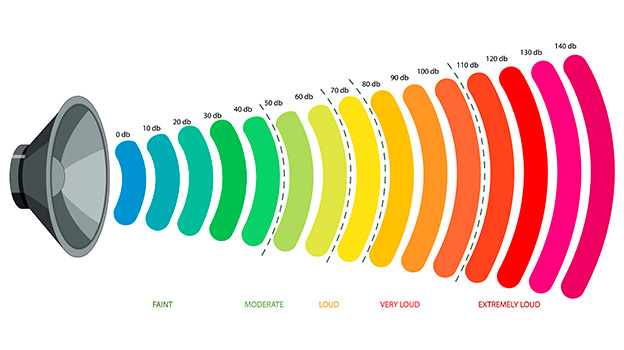
This is one of the biggest differences between real forensic audio work and television. Software can reduce certain kinds of noise, emphasize useful information and allow an analyst to examine a recording in much greater detail, but it cannot manufacture speech that was never captured.
What is possible?
Sometimes a recording responds extremely well to processing. Steady background noise may be reduced, dialogue may become more intelligible and previously difficult details may become easier to evaluate.
Other recordings may contain little more than broadband noise, severe distortion or acoustic masking. A listener may believe that speech is present, but repeated processing can also create artifacts that begin to resemble syllables or voices. That is why controlled listening and objective technical examination are important.
A responsible analyst must know not only what software can do, but also when processing has reached the limit of what the recording can support.
Keeping the Original Recording Intact
A common question is whether enhancement itself constitutes alteration of evidence. Enhancement does create a processed version of the recording, but the submitted source should remain preserved separately.
Working copies can then be created for enhancement, authentication or comparison. Significant processing steps, observations and resulting files should be documented so the relationship between the submitted source and the processed material remains clear.
This distinction is especially important when recordings may be used in legal or investigative matters. Enhancement is performed on controlled copies; the original submitted file should not be overwritten.
Authentication Requires Context
Audio authentication is not simply a matter of examining a waveform and deciding whether a recording is genuine. File metadata, spectral characteristics, encoding behaviour and structural information can all contribute evidence, but each must be interpreted within the claimed history of the recording.
Metadata may have been removed or changed through ordinary copying, messaging applications, cloud services or editing software. Likewise, a spectral discontinuity may deserve investigation without automatically proving deliberate manipulation.
The strongest examination therefore begins with the best available source file and a clearly defined question about what the recording is claimed to represent.
Why Voice Comparison Is Not a “100 Percent Match”
Speaker comparison is one of the most debated areas of forensic audio. A well-known example involved an alleged recording of former Toronto Mayor Rob Ford, where different audio experts expressed different levels of confidence after examining the material. The disagreement itself illustrates how recording quality, methodology and interpretation can affect an opinion.
Speech contains many characteristics that may be evaluated: pitch behaviour, pronunciation, timing, intonation, formant patterns, pauses, speaking habits and other recurring features. None of these should be treated as an infallible identifier on its own.
The closer the questioned and known recordings are in recording conditions, speaking style and usable speech content, the more meaningful the comparison can become.
Crime dramas often show two recordings being compared and a computer immediately announcing a “100 percent confirmed match.” Real forensic audio examination does not produce certainty that way.
A defensible conclusion has to reflect the quality of the source material, the similarities and differences observed, the limitations of the recordings and the strength of the available evidence.
Realistic Expectations Matter
The quality of the original recording remains one of the most important factors in any audio examination. Better source material provides more information for enhancement, authentication and comparison.
Equally important is understanding what the recording can and cannot support. Audio forensic work is most useful when the question is clearly defined, the best available source material is preserved and the conclusions remain proportionate to the evidence.
If you have a recording that requires enhancement, authentication or speaker comparison, you can submit the original recording for evaluation and describe the specific question you need addressed.