
Offline, Immutable and Versioned Backups
Backup sets, snapshots, cloud versions and replicated data are inventoried and tested. Partially affected backups may still contain usable systems, databases or historical versions.
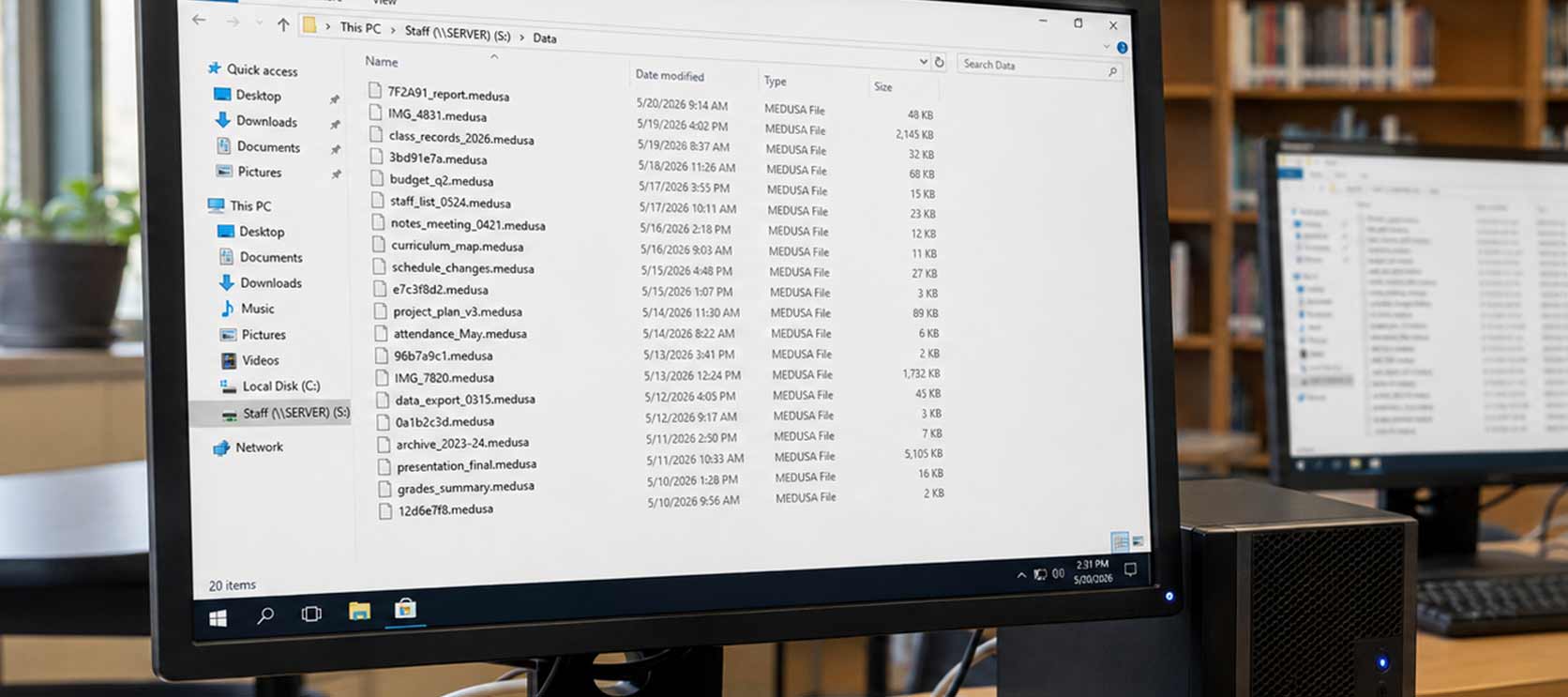
Ransomware recovery is not one procedure or one piece of software. It is a controlled evaluation of encrypted systems, available backups, previous file versions, deleted data, public decryptors and the operational importance of every affected device.
Actions taken immediately after discovery can affect both the scope of the incident and the amount of data that remains recoverable. The priority is to stop further damage without destroying evidence or previous versions that may still exist.
Isolate affected equipment. Disconnect compromised systems from networks, shared storage and synchronization services to limit continued encryption.
Preserve the original state. Do not format, reinstall, run cleanup utilities or begin restoring over affected media before the available recovery paths have been assessed.
Retain incident material. Preserve ransom notes, encrypted file samples, new file extensions, logs, suspicious messages and the approximate incident timeline.
Protect backups. Disconnect unaffected backup targets and avoid automatically synchronizing damaged or encrypted files into otherwise usable historical copies.
A ransom demand does not prove that purchasing a decryptor is the only option. Each incident is examined for independent recovery paths before conclusions are reached.
Backup sets, snapshots, cloud versions and replicated data are inventoried and tested. Partially affected backups may still contain usable systems, databases or historical versions.
The ransom note, extensions and encrypted samples are used to identify the likely family or variant. Legitimate decryptor sources are checked before any other decryption route is considered.
Some ransomware creates encrypted copies and deletes the originals. Sector-level analysis may locate deleted files, temporary data, previous versions or fragments that have not yet been overwritten.
Databases, email stores and line-of-business applications may require recovery from logs, partial backups, exports, caches and surviving data structures rather than ordinary file restoration.
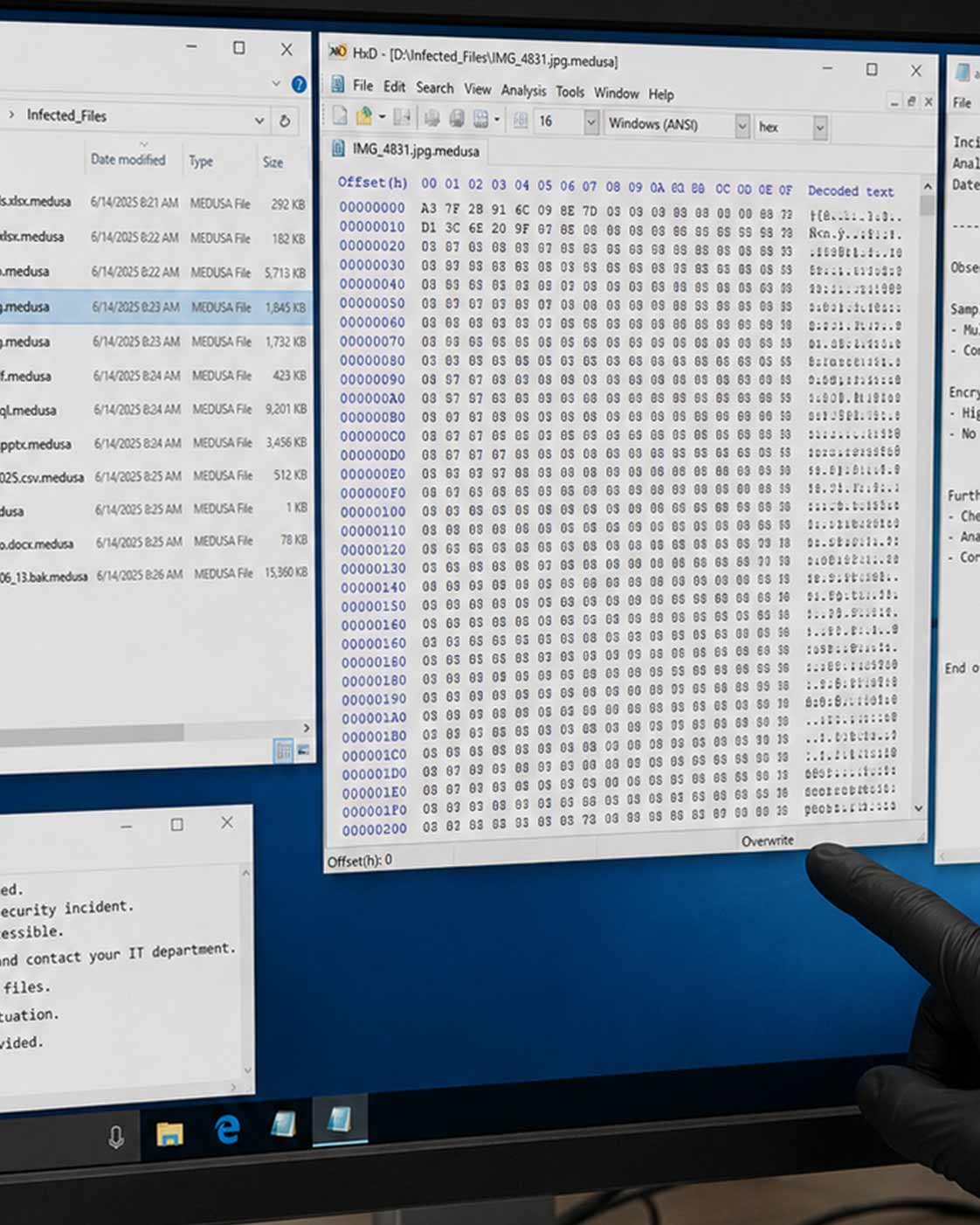
Ransomware includes a continually changing range of families, variants and customized deployments. Some older or technically flawed variants have recognized recovery tools. Modern variants may use correctly implemented encryption for which no public decryption method exists.
Aesonlabs examines the ransom note, encrypted-file structure, extensions, file damage and available system information. Reputable projects such as No More Ransom are checked for applicable decryptors.
Any decryptor is first tested on controlled copies. A process that changes a filename or extension is not automatically successful; representative documents, archives, media files and databases must be opened and validated.
Ransomware families evolve continuously, and operators may change extensions between campaigns. The following are recognizable examples rather than a complete identification database. A filename extension alone is not sufficient to confirm the ransomware family or determine whether a decryptor will work.
.lockbit .abcdA widely deployed ransomware-as-a-service family with Windows, Linux and virtualized-environment variants. Some campaigns use customized or randomly generated extensions.
.qilinA double-extortion family used against larger organizations. Extensions and ransom-note details can vary between deployments.
.akiraObserved in attacks involving Windows and Linux or ESXi environments, frequently affecting network shares, servers and backups.
.playKnown for intermittent encryption and incidents involving businesses, public-sector organizations and critical services.
.clop .cl0pAssociated with large-scale exploitation campaigns, including attacks involving vulnerable managed file-transfer platforms.
.medusaA ransomware-as-a-service operation associated with attacks against corporate, education, healthcare and other organizational networks.
.wncry .wcryA historic self-propagating ransomware outbreak that exploited vulnerable Windows systems and remains relevant when examining older incidents.
.locky .zepto .odin .diablo6An older family distributed heavily through malicious email attachments and documents, with multiple extension changes across its campaigns.
.rykA targeted enterprise ransomware family historically associated with attempts to disable recovery options and encrypt high-value systems.
Identification should also consider the ransom note, encrypted-file structure, malware indicators and incident timeline. Never test an unknown decryptor directly against the only copy of affected data.
When strong encryption has been implemented correctly and no usable key, decryptor, backup or surviving previous data exists, independent decryption may not be technically possible. Even then, payment does not guarantee that a working key will be supplied, that every file will decrypt correctly or that stolen information will be deleted.
If an organization decides to consider communication with the threat actor, that decision should be coordinated with its legal counsel, insurer, incident-response advisors and applicable authorities. Legal, regulatory and sanctions considerations may apply.
Where properly authorized, Aesonlabs can support the technical side of the process by defining which systems actually require decryption, preparing representative test files, evaluating proof of decryption and validating any supplied recovery utility on controlled copies. We do not represent payment as a safe or certain outcome.
An incident involving one computer is very different from an event affecting an entire organization. With dozens or hundreds of systems, recovery must be prioritized according to business importance rather than attempted everywhere at once.
We help organize affected storage by system, data owner, encryption status, backup availability and likely recovery path. Critical databases, production records and essential servers can then be tested first while lower-priority workstations are handled in controlled stages.
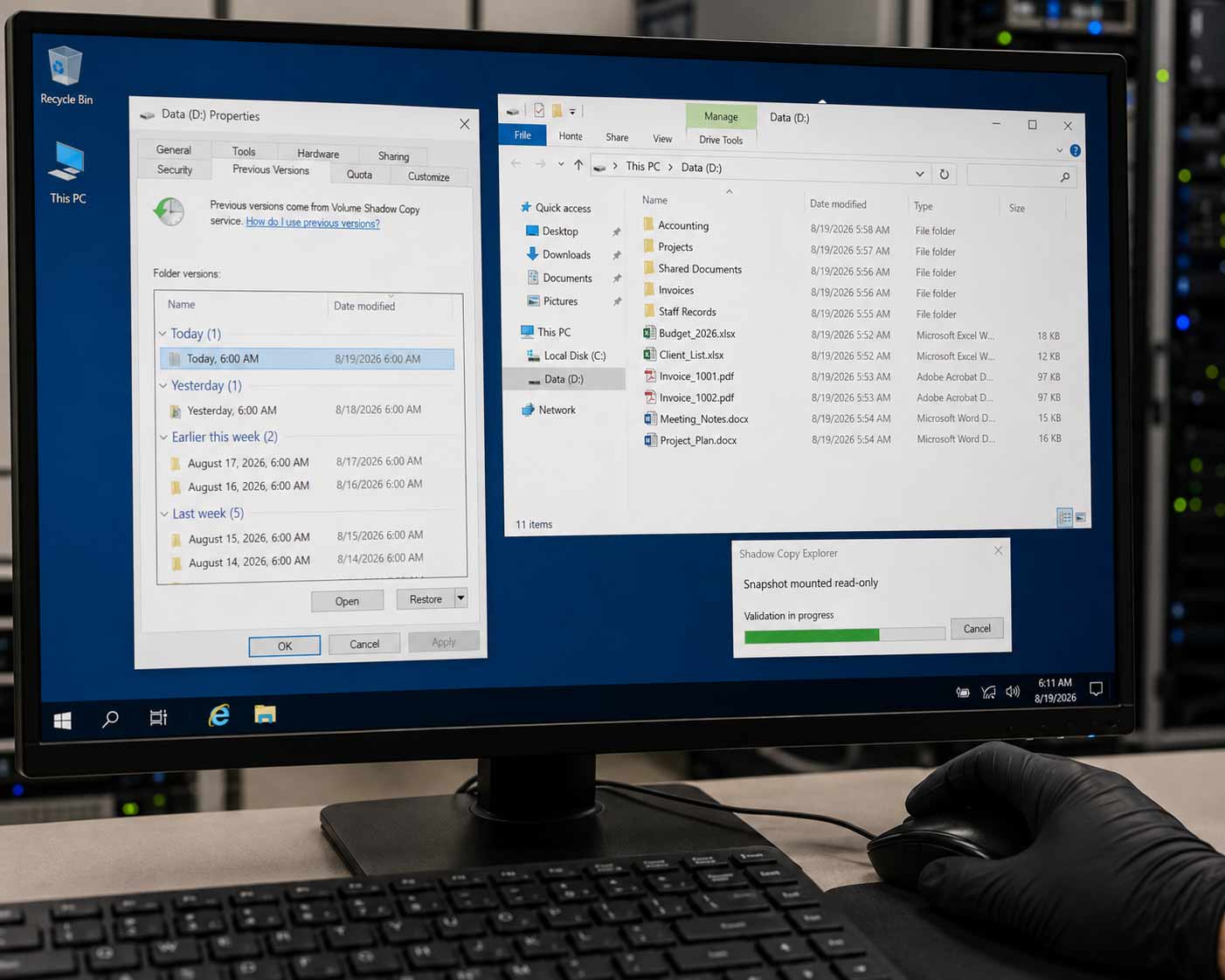
Backup sets are not assumed to be completely good or completely lost. A partially encrypted repository may contain earlier snapshots, unaffected volumes or intact application data. Each candidate source is preserved and evaluated before restoration begins.
Affected systems, backup sources and incident material are protected from further modification.
We determine the likely ransomware family, define the affected data and rank systems according to operational importance.
Decryptors, backups, snapshots, deleted data and application-specific sources are tested using protected working copies.
Representative files and systems are verified before usable data is released for controlled restoration.
Modern ransomware incidents can include credential theft and data exfiltration in addition to encryption. Restoring files does not determine how the intrusion occurred, remove the attacker from the environment or resolve possible privacy and breach-notification obligations. Organizations may also require cybersecurity incident response, legal advice and regulatory reporting outside the data-recovery scope.
Sometimes. Recovery may be possible from unaffected backups, previous versions, deleted originals, application data or a legitimate decryptor. The outcome depends on the ransomware, storage type and changes made after the incident.
No. A supplied key or decryptor may be invalid, incomplete, unstable or unable to repair files damaged during encryption. Payment also does not guarantee that copied data will not be disclosed.
Yes. Earlier snapshots, separate volumes, unaffected files or application-specific backup components may remain usable. The backup should be preserved and examined before it is overwritten or discarded.
A full scan may locate deleted originals, previous file versions, temporary data and fragments outside the currently visible filesystem. Results are strongly affected by overwriting, SSD TRIM and continued use after the attack.
Yes. We can assess and prioritize affected storage, test available recovery paths, examine partially affected backups and validate recovered data. Broader network containment, malware eradication and legal response may require coordination with the organization’s cybersecurity and legal teams.
Tell us how many systems are affected, what storage and backups are available, when the incident was discovered and which data is most important to the organization.
Submit Your Ransomware Case