
Raw NAND
The host system is responsible for ECC, bad-block handling and logical translation. A physical read may require extensive controller-level reconstruction.
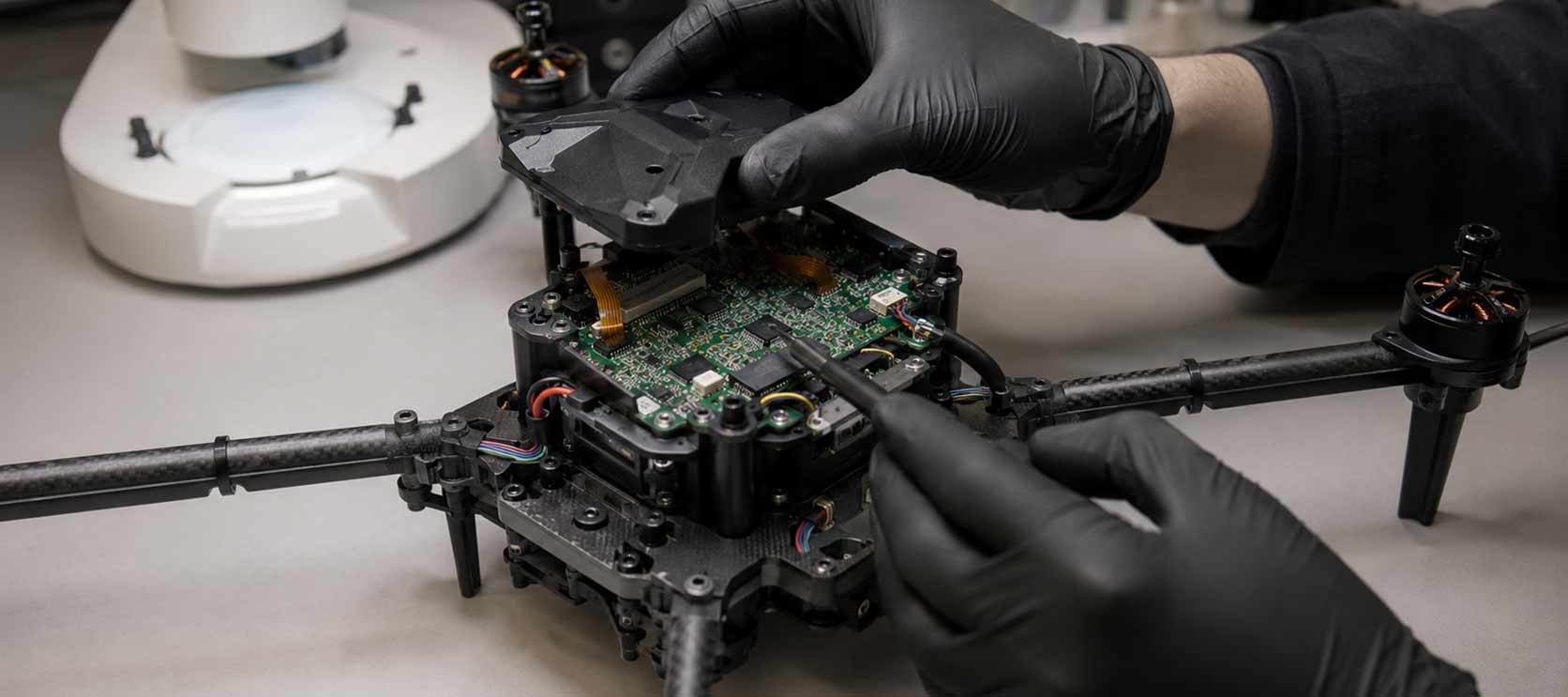
Aesonlabs provides embedded and proprietary NAND recovery for equipment whose storage cannot be treated like a conventional hard drive, SSD, memory card or USB flash drive. These cases can involve raw NAND, eMMC, UFS, serial flash or memory integrated into a microcontroller, together with custom processors, undocumented interfaces and device-specific data structures.
The challenge is often larger than reading one memory component. The original circuitry may control power sequencing, storage initialization, address translation, encryption or access to a proprietary database. Recovery can therefore require examination of the complete system, development of a safe acquisition path and reconstruction of data that was never stored in a standard desktop filesystem.
In ordinary storage media, the interface and logical organization are usually recognizable. A custom electronic device may instead rely on its processor, firmware and surrounding components to make the stored information meaningful. Removing the memory without understanding that relationship can eliminate the only available route to the data.
We begin by identifying where information is stored, how the host communicates with it and whether the original processor or security hardware must remain operational. Board repair, diagnostic access or an in-circuit connection may be preferable to package removal when it preserves a required controller or decryption environment.
Embedded storage is not one universal technology. The architecture determines what can be accessed, which components must be preserved and how much reconstruction may be required after acquisition.
Proprietary storage can be found in surveillance equipment, DVRs and dash cameras; drones and imaging systems; automotive infotainment and telematics modules; industrial controllers, HMIs and robotics; medical and scientific instruments; network appliances; smart meters; data loggers and other custom-built electronics.
When schematics and service documentation are unavailable, recovery may begin by tracing power, ground, clock, reset and data connections. Test pads and undocumented interfaces are evaluated, and the boot sequence may be examined to determine how the processor initializes the memory and where a controlled acquisition can be made.
Oscilloscope and logic analysis, microscopic circuit examination, component research and custom fixtures may be required. The objective is not to force communication with an unknown circuit, but to understand enough of the architecture to select a repeatable access method without unnecessarily altering the source device.
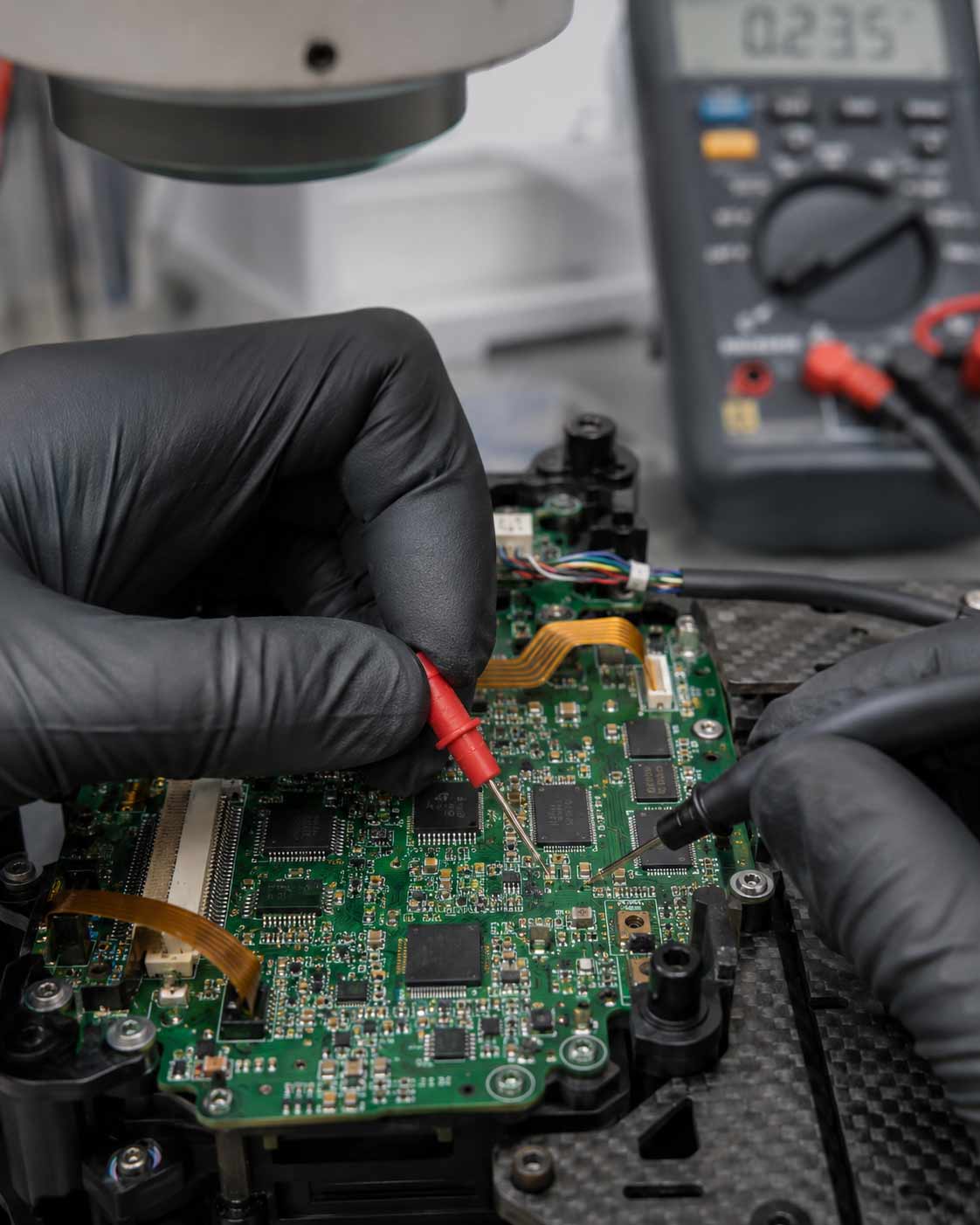
The least destructive workable method is normally preferred. Depending on the architecture and failure, access may be possible through the device's service interface, bootloader, UART, JTAG, SWD, ISP or exposed eMMC and NAND signals. A damaged board may sometimes be repaired sufficiently to restore its native communication path.
When no supported adapter exists, a custom pinout, interposer or temporary fixture may be developed. Package removal, reballing, transplantation to compatible donor hardware or direct reading may be considered when in-circuit access is not viable. Related techniques are explained on our Chip-Off Forensics and Monolithic Pinout pages.
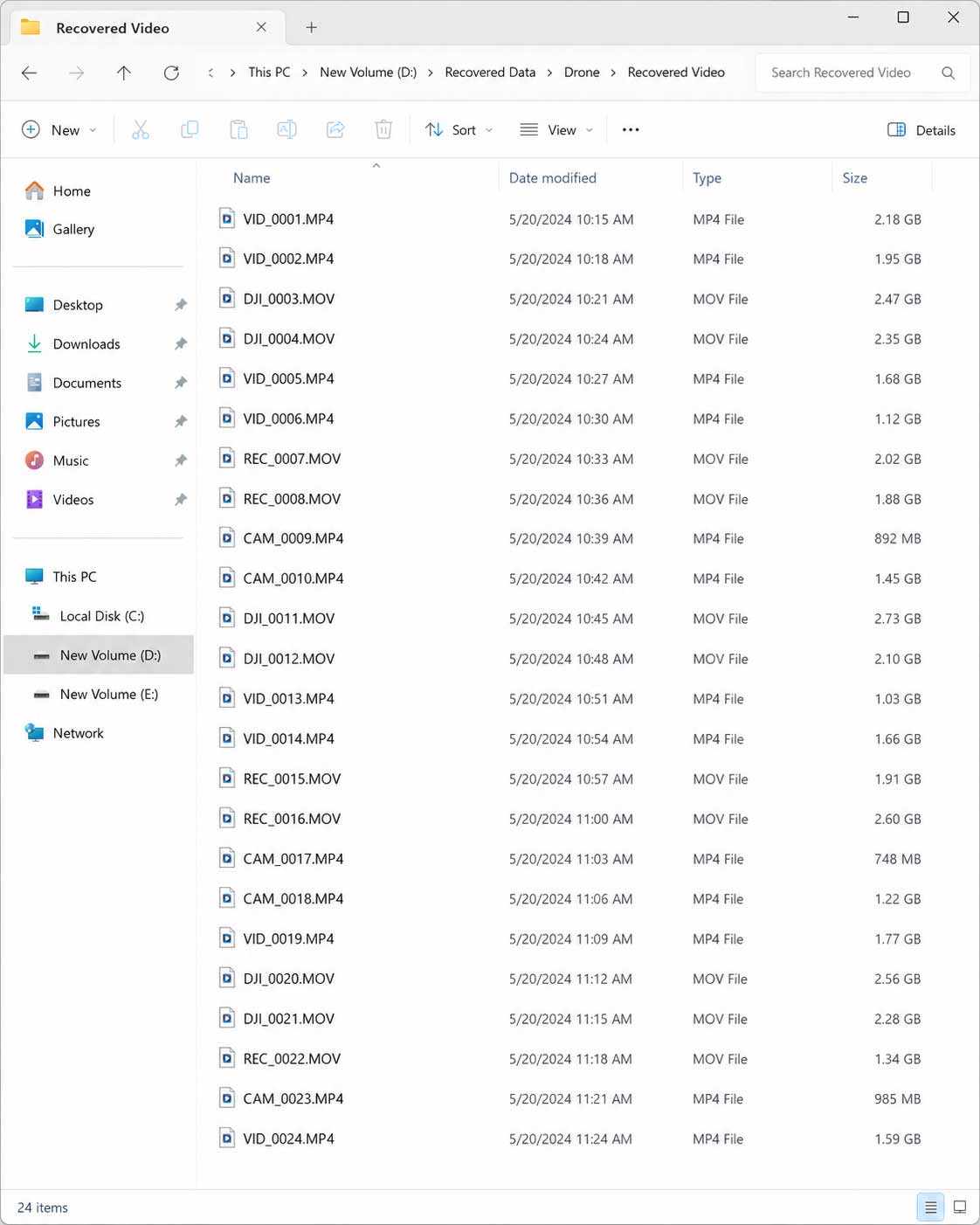
A successful acquisition may produce a standard partition, but many embedded systems store information as raw binary records, circular video buffers, proprietary databases, telemetry, event logs, configuration blocks or calibration tables. Some systems distribute data across several packages or maintain multiple redundant copies.
Raw NAND can require ECC correction, bad-block processing, bank or die separation, scrambling removal, interleave analysis and recreation of the controller's logical translation. Managed flash may present a readable logical image while still containing damaged partitions or application-specific structures that require further analysis.
Reconstruction is guided by the requested result. Recovering surveillance footage, sensor history, configuration data or instrument records can require different parsing and validation work even when the physical acquisition is complete.
These cases can require component identification, circuit research, donor hardware, custom fixtures, repeated acquisition attempts and manual data-format analysis. A meaningful feasibility assessment and turnaround estimate may therefore depend on initial engineering rather than capacity alone.
Aesonlabs combines board-level diagnosis, microsoldering, flash-memory acquisition and logical reconstruction within one case workflow. We evaluate the relationship between the memory and the original system before selecting an access method, and we do not treat package removal as a substitute for understanding the device architecture.
Each case is evaluated individually according to the equipment, failure, required records and available documentation. Shipping is available throughout Canada, and local equipment drop-off can be arranged by appointment.
Open an Embedded Recovery Case
We identify the memory architecture, failure condition, security state and components involved in the data path.
Available interfaces are evaluated and, when necessary, a custom connection, fixture or board-level repair is developed.
The storage is read through the selected native, in-circuit or direct-access method and the resulting image is verified.
Controller translation and proprietary structures are analyzed to produce the most complete usable result available.
It is the recovery of information stored within custom or embedded electronics when the storage interface, controller, circuit or data format is not supported by ordinary recovery methods. Work may involve system diagnosis, interface development, physical acquisition and proprietary data reconstruction.
Whenever possible, yes. The original processor, controller, security component, firmware and power circuitry may be necessary to initialize, translate or decrypt the storage. Associated cables, modules and software can also be important.
Some cases can be approached through undocumented test points, custom pinouts, temporary fixtures, interposers or donor hardware. Feasibility depends on the interface, electrical requirements, package condition and availability of enough technical information to develop a safe connection.
No. A successful acquisition may remain encrypted if the required keys are tied to the processor, secure element, credentials or original operating state. Preserving the complete system may be essential when encryption is present.
Time may be required to identify components, trace circuitry, study the boot process, create a custom interface, stabilize acquisition and decode an undocumented data structure. The engineering work is determined by the system rather than only by storage capacity.
Submit the equipment details, failure symptoms and type of information required. We will review the architecture and determine whether board repair, native access, custom interfacing or physical memory acquisition offers the most appropriate next step.
Submit Your Equipment