
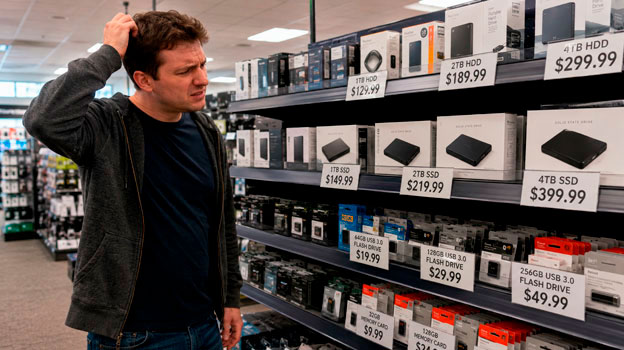
Have you tried buying a hard drive lately?
If you have, you may have noticed something strange. Drives that used to feel cheap and boring are suddenly not so cheap anymore. A basic 1TB hard drive that not too long ago could be found for around $40 or $50 now sometimes shows up for $100, $120, or even more depending on where you look.a
And this is not just one or two strange listings either. According to Tom’s Hardware, hard drive prices have surged by an average of 46% since September 2025, with some models increasing even more.
And if your first reaction was, “Wait a minute, isn’t hard drive technology supposed to be old and affordable by now?” — you are not alone.
That was my first thought too.
Hard drives are not exactly new technology. They are not some shiny new gadget that just came out yesterday with a glowing Apple logo and a price tag that makes you question your life choices. They have been around forever in technology years. So why are prices suddenly moving in the wrong direction?
The quick answer everyone likes to give is AI.
And yes, AI is a big part of it.
But I do not think that is the whole story.
Is AI Really Eating All the Hard Drives?
When people hear “AI,” they usually think about chatbots, image generators, robots, or some futuristic thing that may or may not take everyone’s job by next Tuesday.
But behind all of that is data. A lot of data.
AI systems need to store training data, user data, logs, backups, model checkpoints, video, images, documents, and who knows what else. All of that has to live somewhere. And while SSDs are faster, hard drives are still one of the cheapest ways to store large amounts of data.
So, yes, AI data centers are buying storage.
But here is the important part. AI companies are not rushing to Best Buy to buy every 1TB desktop hard drive off the shelf. That is not how this works.
The real pressure is happening higher up the chain. Large cloud companies and data centers are buying massive quantities of high-capacity enterprise hard drives. These are the big drives used in servers, backup systems, cloud storage, and large-scale infrastructure.
When those customers start locking in supply, the manufacturers naturally follow the money.
And why wouldn’t they?
If you are Western Digital, Seagate, or Toshiba, and a major data center customer wants to secure huge orders for high-capacity drives, you are probably going to prioritize that over making a pile of cheap 1TB drives for regular retail shelves.
This is not just a theory. Tom’s Hardware reported that Western Digital was already sold out of hard drive capacity for 2026, with some long-term agreements already in place for 2027 and 2028. Reuters also reported that Western Digital forecast revenue above estimates because of strong AI-related storage demand.
This is where the problem starts to trickle down.
Consumer Hard Drives Are No Longer the Main Character
This may be the part that matters most for everyday buyers.
For years, regular consumers were a huge part of the hard drive market. Desktop computers, laptops, external drives, game storage, family photos, office backups — all of that created demand for small and mid-sized hard drives.
But that world has changed.
Most laptops now use SSDs. Many desktop users use SSDs as their main drive. Phones and tablets do not use traditional hard drives at all. Even many home users who still need storage are buying external SSDs or cloud subscriptions instead.
So the low-capacity consumer hard drive is not as important to the industry as it used to be.
That does not mean nobody uses them. People absolutely still do. Small offices, home users, surveillance systems, backup drives, older computers, external enclosures — there are still plenty of reasons someone may want a 1TB, 2TB, or 4TB hard drive.
But from the manufacturer’s point of view, the money is not in the small consumer drive anymore. The money is in high-capacity enterprise storage.
So when production gets tight, guess which side gets priority?
Exactly.
Not the guy trying to buy one drive for his home computer.
So Why Is a 1TB Drive So Expensive Now?
This is the part that feels ridiculous.
A 1TB hard drive being listed for $120 or $130 does not mean it suddenly costs that much to build. It does not mean the tiny little platters inside became magical overnight. It usually means something else is going on.
Normal stock may be low.
Retailers may not be getting the same supply they used to.
Manufacturers may not care about pushing low-capacity models into the channel.
Third-party marketplace sellers may be taking advantage of the situation.
And once normal inventory gets thin, weird pricing starts showing up.
We have all seen this before. A product disappears from regular stock, then suddenly some random seller has it listed at three times the price like it is a rare antique. Except it is not a rare antique, it is a hard drive.
This is why the 1TB price jump is not a clean “AI bought all the drives” story.
AI demand is more like the wave that pushes the whole market. The small consumer drives get hit indirectly because the industry is busy focusing on bigger and more profitable products.
Hard Drives Are Not Easy To Scale Overnight
Another thing people forget is that hard drives are complicated little machines.
They may look simple from the outside. Just a metal box, a label, a connector, and maybe a few bad memories if you have ever heard one clicking.
But inside, there are platters, read/write heads, motors, actuator arms, magnets, bearings, filters, firmware, circuit boards, cache memory, and extremely precise mechanical parts. Modern high-capacity drives may also use helium-filled designs.
This is not something a company can just double next month because demand went up.
Hard drive manufacturing needs specialized factories, suppliers, testing, cleanrooms, precision assembly, and a whole chain of parts that come from different places around the world.
So when demand rises quickly, supply cannot always respond quickly.
That is when prices start moving.
What About SSDs?
SSDs are not immune either.
In fact, the SSD side may be under even more pressure in some areas because of NAND flash and DRAM shortages.
SSDs do not use spinning platters like hard drives. They use flash memory. That flash memory is also needed for enterprise SSDs, servers, phones, laptops, AI systems, and many other devices.
So while hard drives are being pulled by bulk storage demand, SSDs are being pulled by the memory market.
Different technology. Similar problem.
The big customers want supply. Manufacturers prioritize higher-margin enterprise products. Consumer buyers end up paying more.
Same movie, different storage device.
Tariffs, China, And The “Little Bit Here, Little Bit There” Problem
Now, is this all because of tariffs?
No.
I would not say that.
But tariffs and trade tensions can absolutely add pressure.
Storage devices are global products. A drive may be assembled in one country, use parts from another, electronics from somewhere else, and then travel through several distribution channels before it reaches a customer in Canada or the United States.
So when there are new tariffs, trade disputes, export controls, shipping problems, or uncertainty between large economies like the United States and China, it adds friction.
Maybe one component gets more expensive.
Maybe shipping costs more.
Maybe a distributor raises prices because they do not know what replacement stock will cost.
Maybe retailers build in a little more margin because the next shipment may come in higher.
A little bit here. A little bit there.
Before long, the customer is looking at the checkout page wondering why a regular hard drive suddenly costs like it has a medical degree.
Do Global Conflicts Matter?
Yes, but probably not in the simple way people think.
The war in Ukraine, tensions in the Middle East, Red Sea shipping problems, energy costs, insurance costs, and general global instability can all affect electronics pricing indirectly.
But I would be careful about blaming one conflict directly for hard drive prices unless there is clear evidence that a specific material or component was affected.
In most cases, these conflicts are not the main reason the price went up.
They are part of the background noise that makes everything more expensive and harder to predict.
Shipping gets riskier. Fuel gets more expensive. Insurance costs rise. Companies build more uncertainty into their pricing.
Again, a little bit here, a little bit there.
The Bigger Problem: The Storage Market Has Changed
The main issue is not just that prices went up.
The bigger issue is that the storage market has changed.
Hard drives used to be a boring commodity product for regular people. You needed more storage, you bought another drive, and that was that.
Now the same manufacturers are feeding massive cloud and AI infrastructure projects. Data centers want predictable supply. They sign large agreements. They buy in volume. They pay more. And they are much more important to the manufacturers than one person buying a single desktop drive.
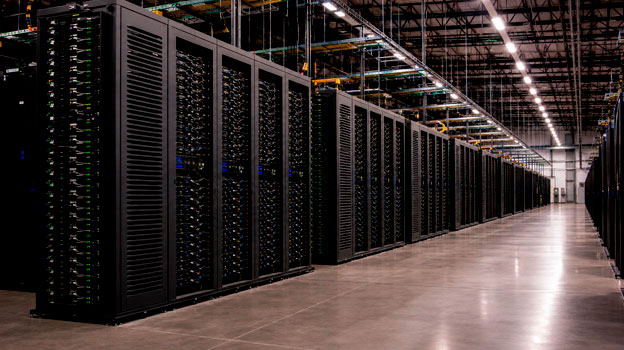
That means regular buyers are now competing with a completely different kind of customer.
Not directly, maybe.
But indirectly, yes.
And regular buyers do not win that fight.
Be Careful With Cheap Storage
This is where things get a little more concerning from a data recovery point of view.
When prices go up, people naturally start looking for cheaper options. That makes sense. Nobody wants to overpay for a hard drive, SSD, USB stick, or memory card.
But cheap storage can be dangerous.
And I do not mean dangerous in the movie trailer kind of way.
I mean dangerous in the very boring, very real way where your files are there one day and gone the next.
This applies to hard drives, but it applies even more to SSDs, USB flash drives, SD cards, microSD cards, and other flash-based storage. The cheaper the storage gets, the more corners may have been cut somewhere.
Sometimes it is a questionable controller.
Sometimes it is poor firmware.
Sometimes it is low-grade NAND flash.
Sometimes it is recycled NAND flash that already lived through a previous life before being installed into a “new” product.
Sometimes it is a fake-capacity device that says it is 1TB, but in reality it is nowhere close to that.
And sometimes the device works just long enough for you to trust it.
That is the worst part.
A bad USB stick, SSD, or memory card does not always fail immediately. It may format normally. It may copy files normally. It may even show the correct size in Windows or macOS. Everything looks fine, until one day the files are corrupted, folders disappear, the device becomes unreadable, or your computer suddenly asks you to format it.
At that point, the “good deal” does not feel like a good deal anymore.
I wrote about this in more detail in my Technology.org article, “The Quality of Flash Media Is On The Decline and Here Is Why.” The short version is this: cheap flash media is not always cheap because technology improved. Sometimes it is cheap because the quality of the storage itself went down.
That can mean weaker quality control.
It can mean reused or refurbished components.
It can mean NAND flash chips that have already gone through read and write cycles before the customer ever bought the device.
It can mean no-name controllers, mystery chips, strange firmware, or devices assembled with very little transparency.
And in some cases, it can mean something even worse, like a memory card hidden inside another memory card, a USB drive missing part of its expected NAND, or a device claiming a capacity it does not actually have.
That sounds ridiculous, but this is exactly the kind of thing data recovery labs run into.
Flash storage has another problem too. Unlike a traditional hard drive, where we can sometimes deal with mechanical failure, head failure, firmware issues, bad sectors, or surface damage, cheap flash devices can fail in ways that are much harder to work with.
If the controller dies, the memory chip may still contain data, but accessing that data can be complicated.
If the NAND is degraded, the raw data may be full of errors.
If the device uses strange translation logic, poor firmware, or fake-capacity tricks, recovery can become much more difficult.
And if the flash chips were already near the end of their life before the product was even sold, then the customer is basically starting the race ten feet from the cliff.
This is why a storage price spike creates a second problem.
People see expensive new hard drives or SSDs, then go looking for the cheapest alternative they can find. Maybe it is a no-name SSD. Maybe it is a suspiciously cheap USB stick. Maybe it is a memory card with a capacity that looks too good for the price. Maybe it is a “new” drive from a random marketplace seller.
And sometimes it really is too good for the price.
A suspiciously cheap storage device is not a bargain if it contains your only copy of important files.
That is not storage.
That is gambling with a progress bar.
So if you are buying storage right now, be careful. Buy from reputable sellers. Avoid strange marketplace listings. Be cautious with unknown brands. Be extra careful with very cheap high-capacity USB drives, SD cards, microSD cards, and SSDs. And if a device is marked as refurbished, recertified, renewed, white-label, or open-box, understand what that means before trusting it with important data.
Saving $30 on a drive is nice.
Losing family photos, business records, client files, accounting data, or years of work is not.
What Should You Do?
If you need a drive, do not panic-buy the first thing you see.
Check the seller. Buy from a reputable source. Be careful with third-party marketplace listings. If the price looks strange, ask why. If the drive is marked as recertified, renewed, refurbished, or white-label, understand what that means before trusting it with important data.
Also, do not keep using an old failing drive just because new drives are expensive.
That is one of the worst things you can do.
If a drive is clicking, disconnecting, freezing your computer, showing bad sectors, or acting strange, do not keep pushing it. A more expensive replacement drive is annoying. A failed drive with no backup is much worse.
And most importantly, keep backups.
Not one backup. Not one old external drive sitting in a drawer from 2017 with a cable you can no longer find.
A real backup.
Preferably more than one copy, stored in more than one place.
So, What Is Really Causing The Price Increase?
The short version is this:
AI and cloud data centers are the biggest visible reason.
But they are not the only reason.
Hard drive manufacturers are prioritizing enterprise customers. Consumer drives are no longer the center of the market. Production cannot scale instantly. SSD and memory markets are also under pressure. Tariffs and global trade tension add cost and uncertainty. Shipping and geopolitical problems add more friction. Retail scarcity and marketplace sellers make the final price look even worse.
So when you see a 40% or 50% price increase, it is probably not one giant reason.
It is a stack of smaller problems sitting on top of one very big problem.
And right now, that big problem is that the world wants more storage than the supply chain can comfortably deliver.
Final Thoughts
Hard drives are not going away anytime soon.
Even with SSDs getting faster and cloud storage becoming more common, hard drives still play a huge role in storing large amounts of data. Data centers use them. Backup systems use them. Surveillance systems use them. Businesses use them. Regular people still use them too.
But the days of assuming hard drives will always be cheap may be coming to an end, at least for now.
Maybe prices settle down later. Maybe production catches up. Maybe the market adjusts.
Or maybe we are entering a new phase where storage is no longer as boring and predictable as it used to be.
Either way, one thing has not changed.
If your data matters, do not wait for the market to make sense before protecting it.