
Quantum Fireball
Fireball, Fireball Plus, Fireball lct and related desktop IDE / ATA families, including many drives still found in older PCs and archived systems.
Have an old Quantum hard drive that no longer spins, clicks, disappears from BIOS or contains unreadable sectors? Aesonlabs provides professional Quantum data recovery for legacy desktop, workstation and SCSI hard drives.
We work with older Quantum families including Fireball, Bigfoot, Atlas, ProDrive, LPS and other legacy models. Because these drives are now very old, diagnosis focuses on preserving the original media and recovering the data with as little additional stress as possible.
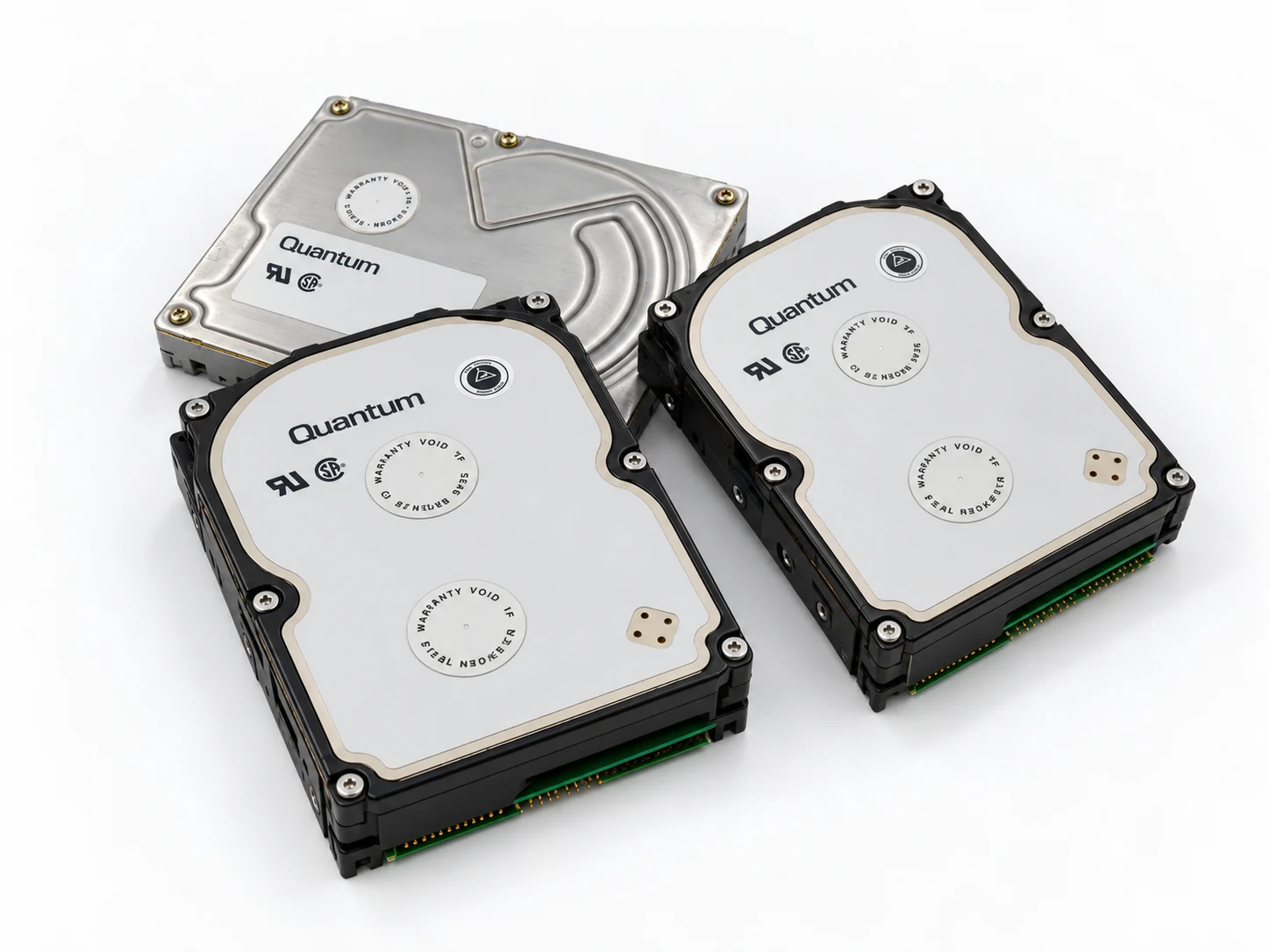
Exact model information matters on legacy hardware because donor compatibility can be narrow. If your drive is not listed below, send us the model number from the label and we can identify the platform before any recovery work begins.
Fireball, Fireball Plus, Fireball lct and related desktop IDE / ATA families, including many drives still found in older PCs and archived systems.
Bigfoot TS, TX, CY and other 5.25-inch desktop models requiring legacy interfaces, careful mechanical handling and increasingly scarce donor parts.
Atlas SCSI hard drives used in older workstations, servers and storage systems, including higher-speed enterprise models.
Older ProDrive and LPS models from vintage computers and long-term archives, where the data may be far more valuable than the small capacity suggests.
We can also evaluate less common Quantum models. Send the model, capacity and interface type and we will confirm whether suitable recovery support is available.
Older connectors and host interfaces are not a problem in the lab. The priority is the condition of the original drive, not whether a modern computer can connect to it.
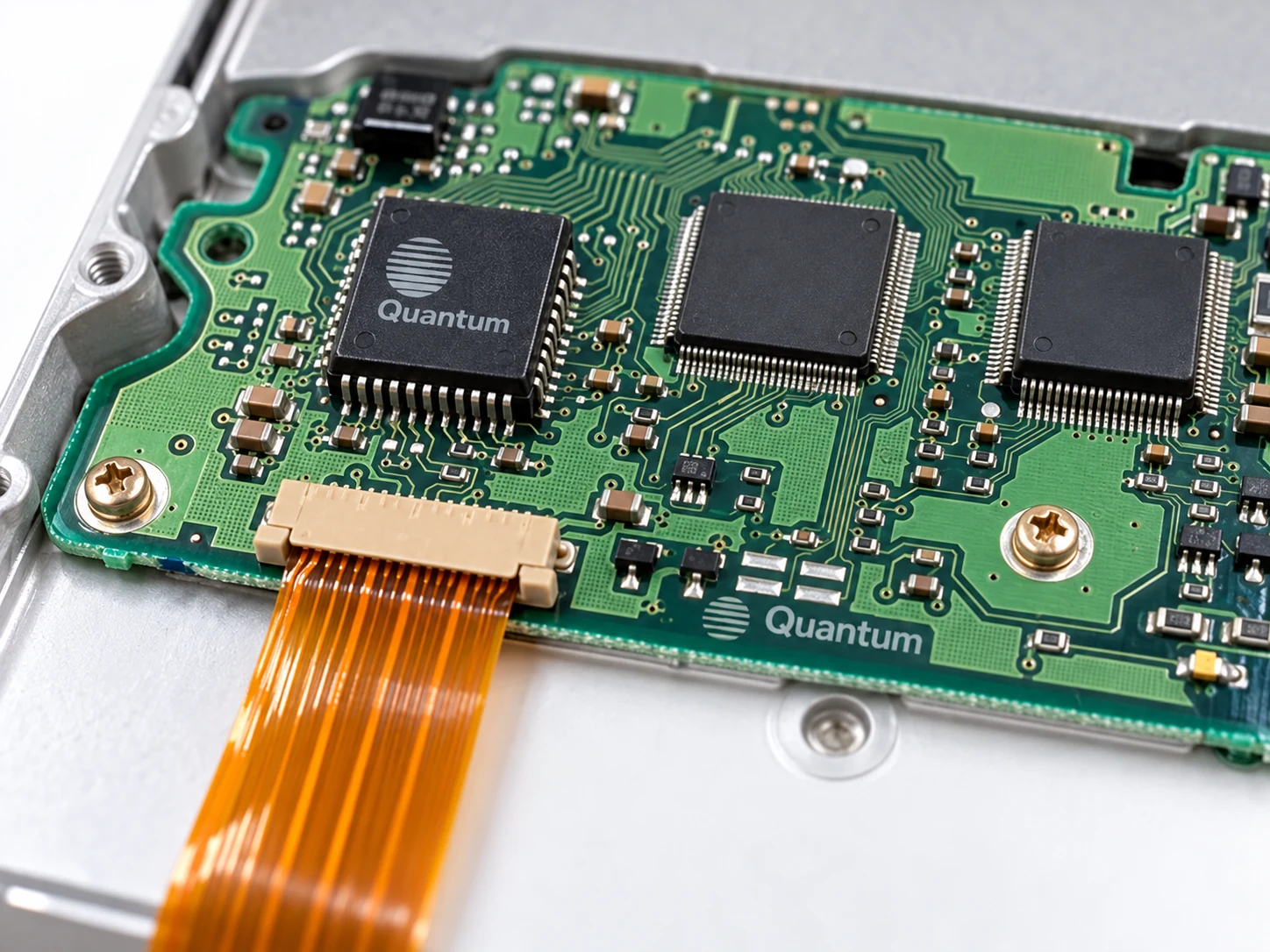
PCB faults, aging electronics, seized bearings or spindle problems can leave an old Quantum completely silent when power is applied.
Failed or weakened read/write heads can prevent normal initialization and can damage already fragile media if the drive is repeatedly powered on.
Firmware, electronics, head or Service Area problems can cause a Quantum drive to spin normally but fail to identify correctly.
A drive may still identify but hang during reads, disappear under load or contain unreadable areas that require controlled hardware imaging rather than file-copy attempts.
Quantum hard drives are old enough that working donor parts can be difficult to find. Head assemblies, PCBs, motors and compatible donor chassis may need to be matched carefully before mechanical or electronic work begins.
Once stable access is restored, the drive is imaged to separate storage. We do not rely on an aging Quantum to remain stable while files are browsed one at a time. The objective is to capture the readable media first and recover the filesystem from the image afterward.
We accept Quantum data recovery cases by tracked shipment from across Canada, the United States and internationally. Include the model number, capacity, interface and a short description of what the drive is doing.
If the drive has already been opened, had a PCB replaced or was examined by another recovery company, include that history with the case.
Send the exact model number if possible, along with the capacity, interface and current symptoms. For very old drives, this information helps us determine donor availability before unnecessary testing is performed.
Start with the model, symptoms and the data you need recovered.