
IBM Deskstar
Deskstar desktop drives including older DPTA, DJNA, DTLA and later GXP-series models, commonly found in legacy PCs and archived systems.
Have an old IBM hard drive that clicks, no longer spins, disappears from BIOS or contains unreadable sectors? Aesonlabs provides professional IBM data recovery for legacy desktop, laptop, workstation and SCSI hard drives.
We work with IBM Deskstar, Travelstar, Ultrastar, Microdrive and other legacy models. Because these drives are now old, recovery often depends on preserving the original media, finding compatible donor parts and imaging the drive as soon as stable access is restored.
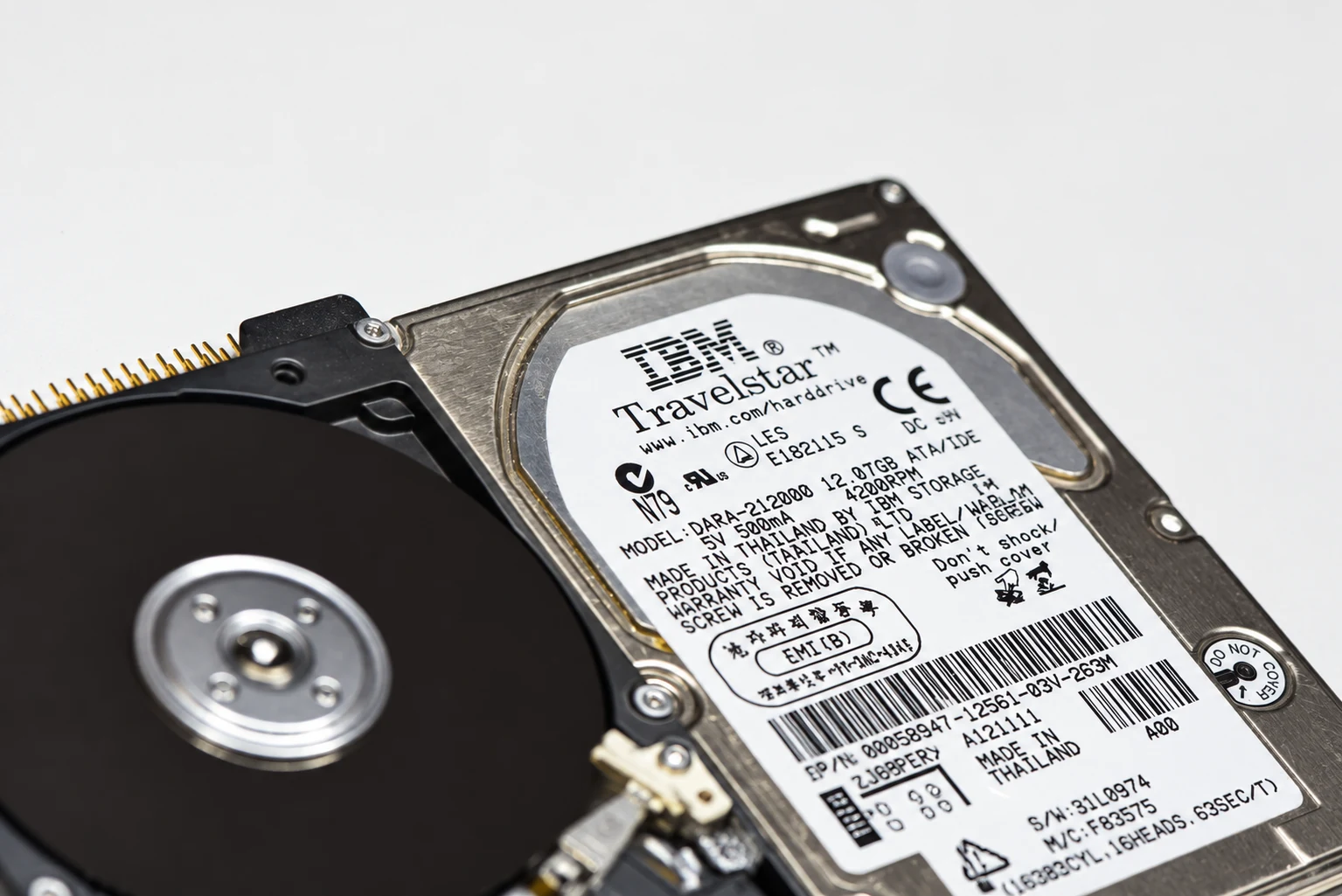
Exact model information is important on older IBM drives because firmware revision, head configuration and donor compatibility can vary significantly. If your model is not listed below, send us the model number from the label and we can identify the platform.
Deskstar desktop drives including older DPTA, DJNA, DTLA and later GXP-series models, commonly found in legacy PCs and archived systems.
2.5-inch Travelstar hard drives used in older laptops and portable systems, including IDE / PATA models with mechanical, PCB and media-related failures.
Ultrastar enterprise hard drives from older workstations, servers and storage systems, including legacy SCSI families.
Miniature Microdrive hard disks used in CompactFlash-sized storage applications. These devices require careful handling because of their extremely small mechanical components.
Common Deskstar generations that may arrive with head failure, unstable media, spindle problems or drives that identify inconsistently.
We can evaluate less common IBM models as well. Send the exact model, capacity and interface type and we will confirm the appropriate recovery path.
Weak or failed read/write heads can prevent an IBM drive from initializing normally and may cause repeated clicking or recalibration attempts.
PCB faults, spindle problems, seized bearings or aging electronics can leave an IBM hard drive completely silent when power is applied.
Firmware, Service Area, electronics or head problems can cause the drive to spin but fail to identify correctly to the host system.
Some drives still identify but freeze during reads, disappear under load or contain unstable areas that require controlled hardware imaging rather than normal file copying.
IBM hard drives are old enough that compatible donor parts can be difficult to source. Matching heads, PCBs, motors and donor chassis may be necessary before mechanical or electronic recovery work can begin.
Once the drive becomes readable, the priority is to image it to separate storage. We do not depend on an aging IBM drive remaining stable while individual files are copied one at a time.
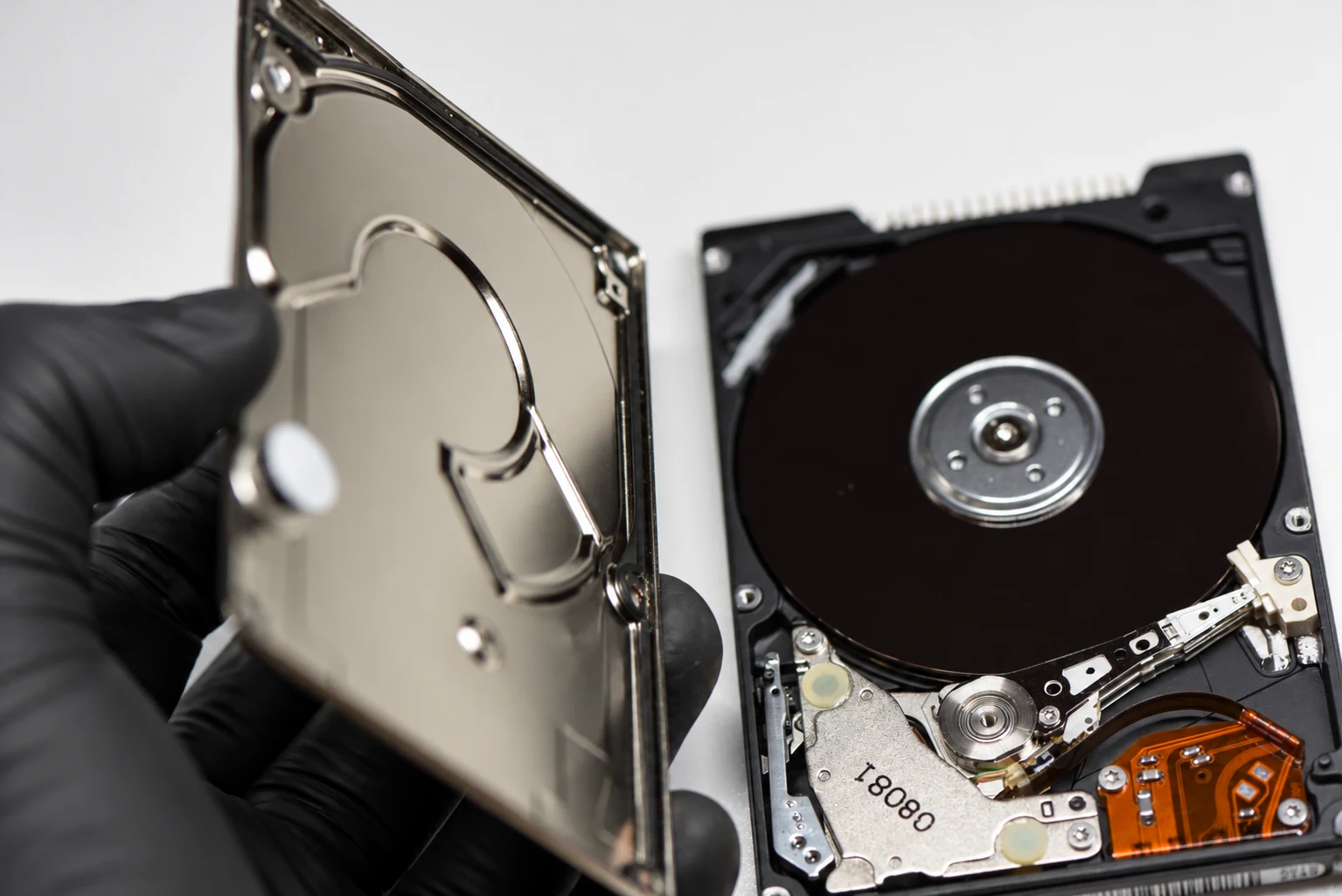
We accept IBM data recovery cases by tracked shipment from across Canada, the United States and internationally. Include the exact model number, capacity, interface and a short description of the current symptoms.
If the drive has already been opened, had a PCB replaced or was examined by another recovery company, include that history with the case.
Send the exact model number if possible, along with the capacity, interface and current symptoms. On older drives this helps us identify the family and check donor compatibility before unnecessary testing is performed.
Start with the model, symptoms and the data you need recovered.