
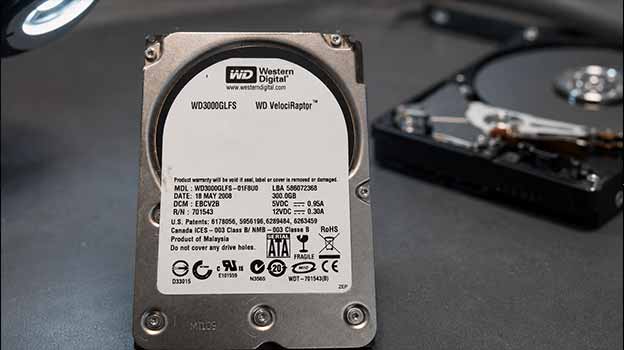
A continuously clicking hard drive is often assumed to have failed read/write heads. That is a reasonable starting point, but it is not a complete diagnosis. This Western Digital VelociRaptor case demonstrates why the condition of every recording surface must be evaluated before repeated head replacements are allowed to continue.
The drive arrived already opened and had previously been examined by several other companies. No data had been recovered. Its reported symptom was continuous clicking, and the data visible in the supplied drive photograph can be extracted from that image. The case therefore began with two important concerns: an uncertain service history and the possibility of internal media damage.
A Drive That Had Already Been Opened
Previously opened drives require additional caution. The current condition may reflect the original failure, earlier diagnostic work, repeated power cycles or a combination of all three. Before attempting a repair, the laboratory must determine what remains intact and whether further work has a technically reasonable chance of producing readable data.
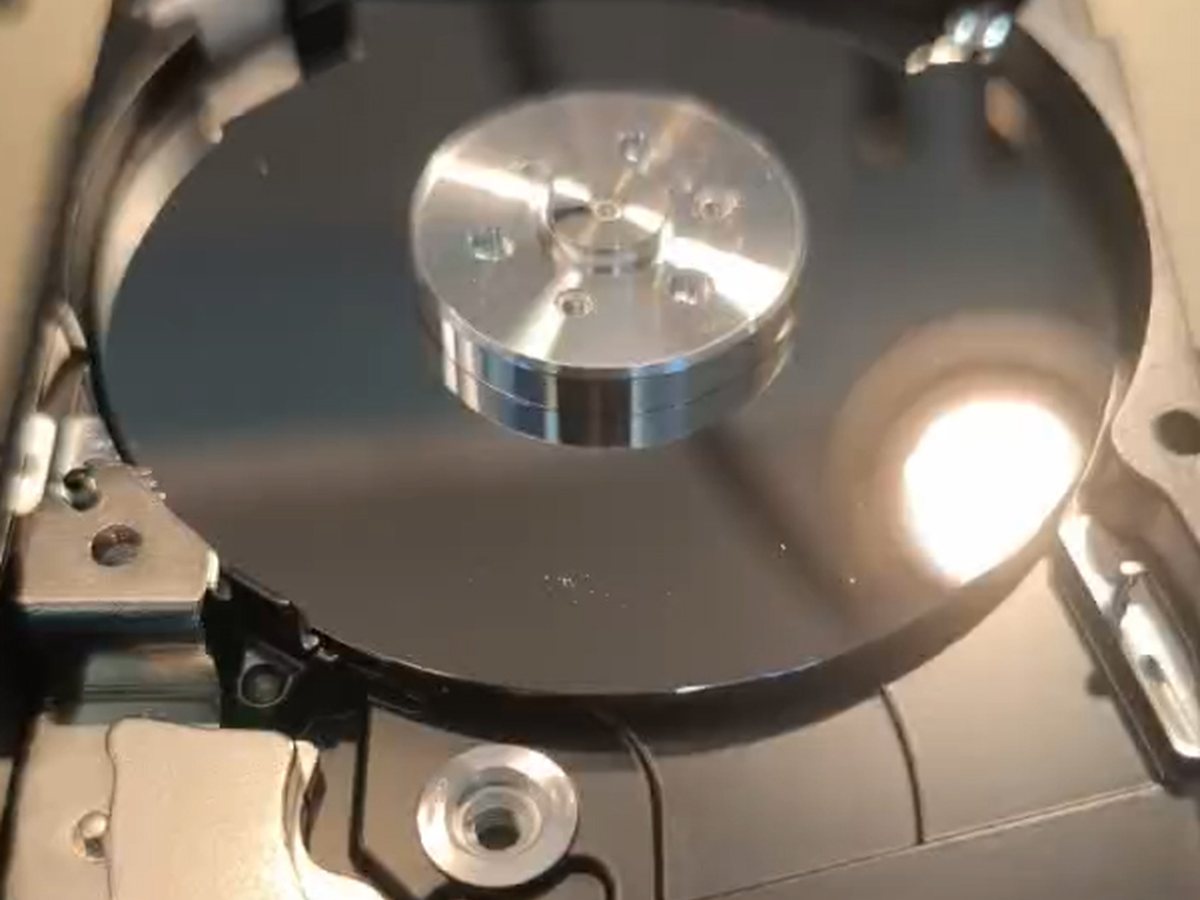
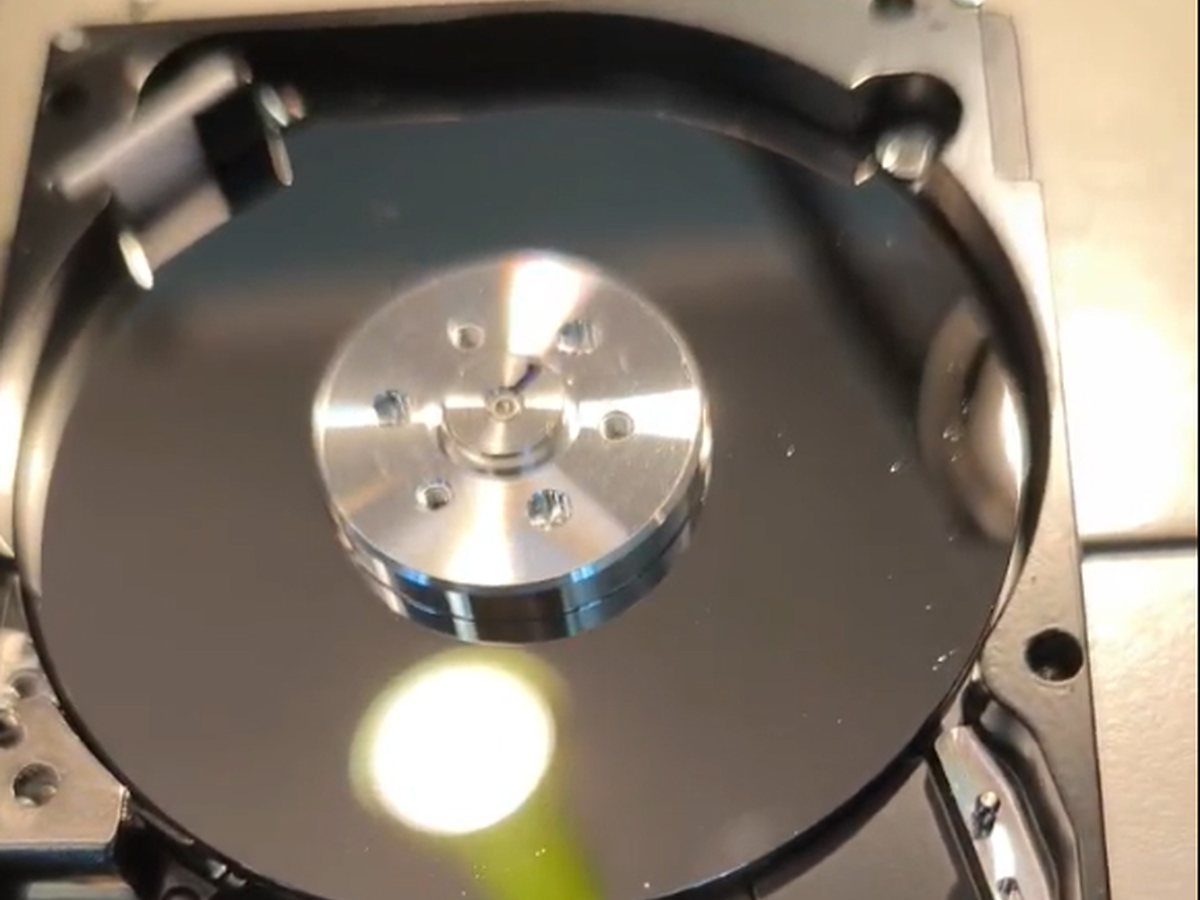
Initial inspection revealed visible damage on the exposed upper platter. However, it did not resemble the deep, continuous circular scoring commonly associated with a conventional hard-drive head crash. The defects appeared as many tiny points distributed across the surface. The heads also did not show the heavy visible contamination that might normally cause an immediate decision to stop.
The Visible Platter Did Not Tell the Entire Story
The absence of a dramatic circular scratch can be misleading. Platter damage does not need to form a continuous ring to be destructive. Small defects can disturb the extremely narrow flying clearance between a read/write head and the recording surface.
A head does not touch a healthy platter during normal operation. It flies above it on a very thin cushion of air. A small raised edge, loose particle or damaged coating can destabilize or destroy a replacement head. When hundreds of defects are distributed across a surface, the risk is fundamentally different from encountering one isolated imperfection.
Why Head Replacement Was Attempted
Based on the initial view, a controlled head replacement was still considered reasonable. The visible marks were not circular, and the original heads did not appear heavily contaminated. If the damage had been limited to one recording surface, a partial recovery might still have been possible by controlling access to the affected head and imaging from the remaining surfaces.
Several replacement attempts were made under controlled conditions. The drive continued to click and failed to reach a stable state suitable for imaging. Repeating the same procedure without a better explanation would only consume additional donor parts and risk creating more damage.
The Damage Was Easy to Underestimate
The defects were more apparent to the eye than in still photographs. Directional light and changes in viewing angle revealed many more points than a single image could show. Video inspection provided a better record, but even that did not fully reproduce what was visible during direct examination.
This is an important diagnostic limitation. Reflective platter surfaces are difficult to photograph, and an apparently clean image does not necessarily represent a clean surface. Inspection has to include controlled lighting, multiple viewing angles and careful evaluation of the complete platter stack when the symptoms and repair results do not agree with the initial view.
Examining Every Recording Surface
After the head replacements failed, the complete platter assembly was disassembled for inspection. The purpose was no longer to perform another speculative repair. It was to determine whether any recording surface remained physically suitable for controlled access.
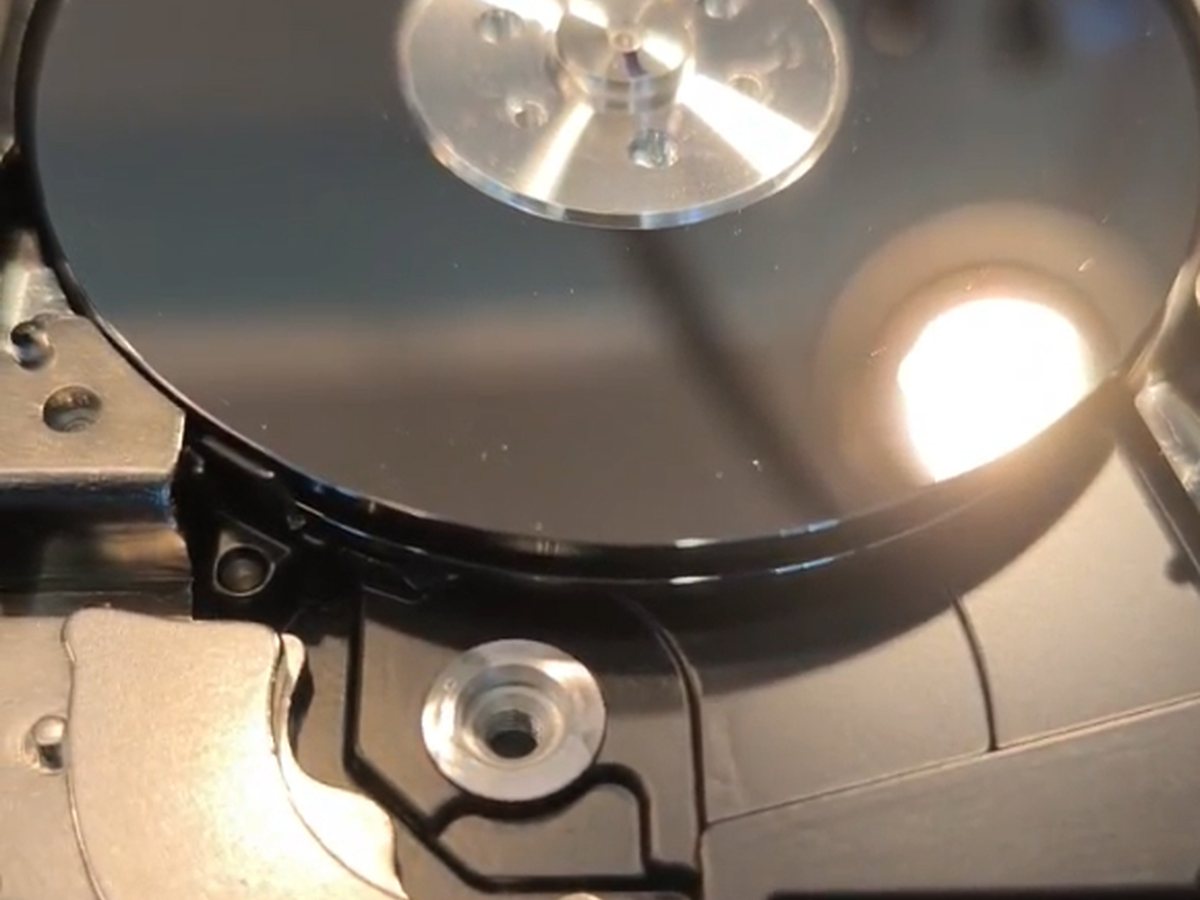
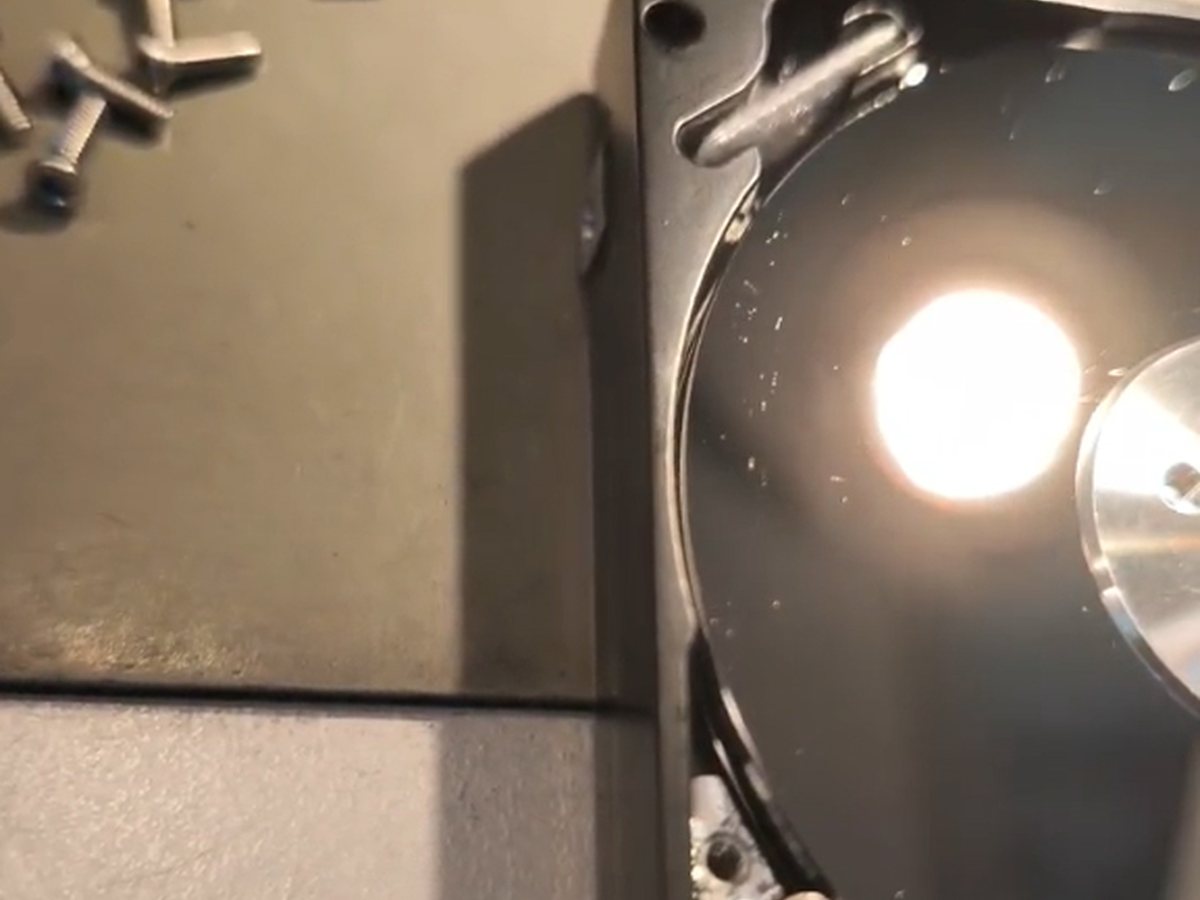
The drive contained three recording surfaces, identified here as surfaces 0, 1 and 2. Each surface showed the same general pattern: numerous small defects spread across the platter rather than one obvious circular scratch.
Surface 0
The upper recording surface showed distributed point damage that became clearer under direct light. The marks were small individually, but their number and coverage made the surface unsafe for reliable head flight.
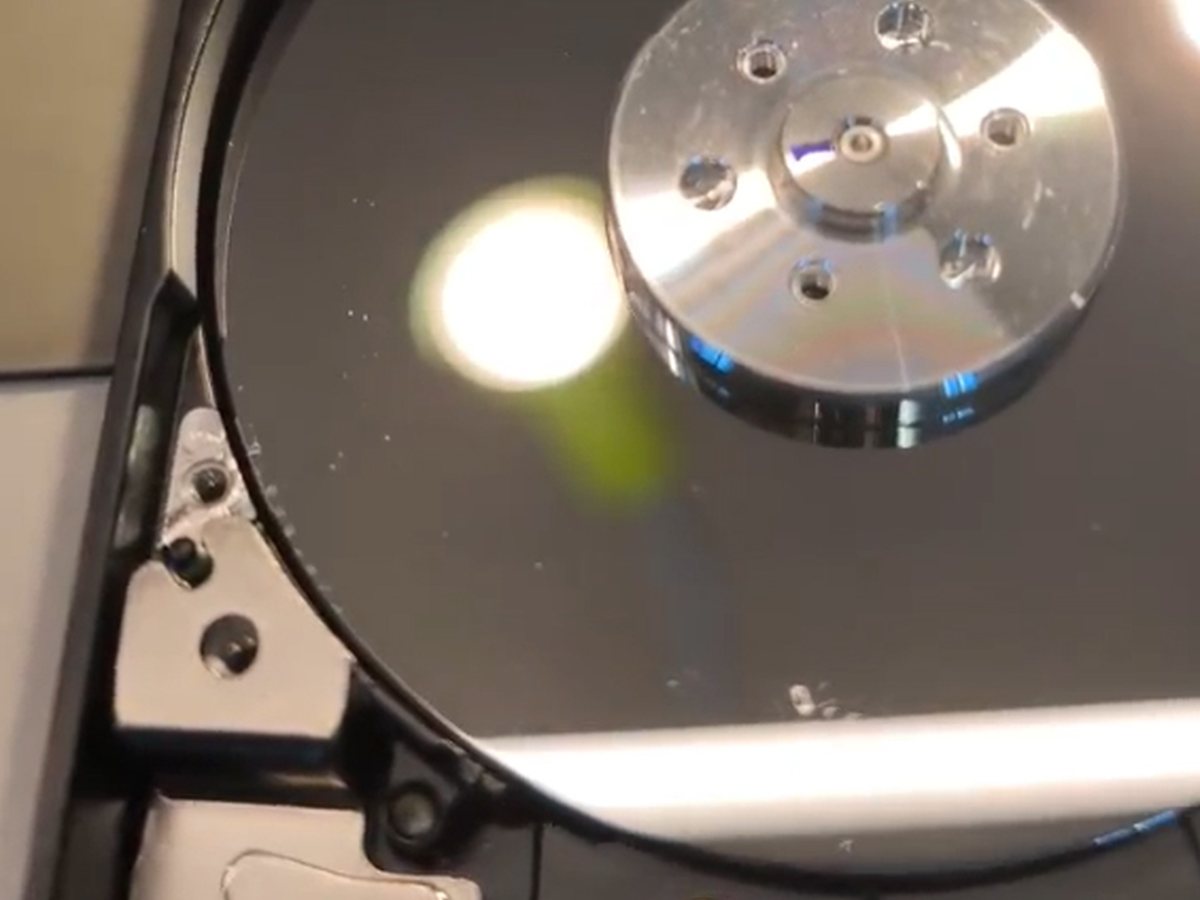
Surface 1
Surface 1 was especially significant because the service area and servo information were located near the outer region of surfaces 0 and 1, where the damage was most concentrated. Without dependable access to this information, stable initialization and controlled reading could not be expected.
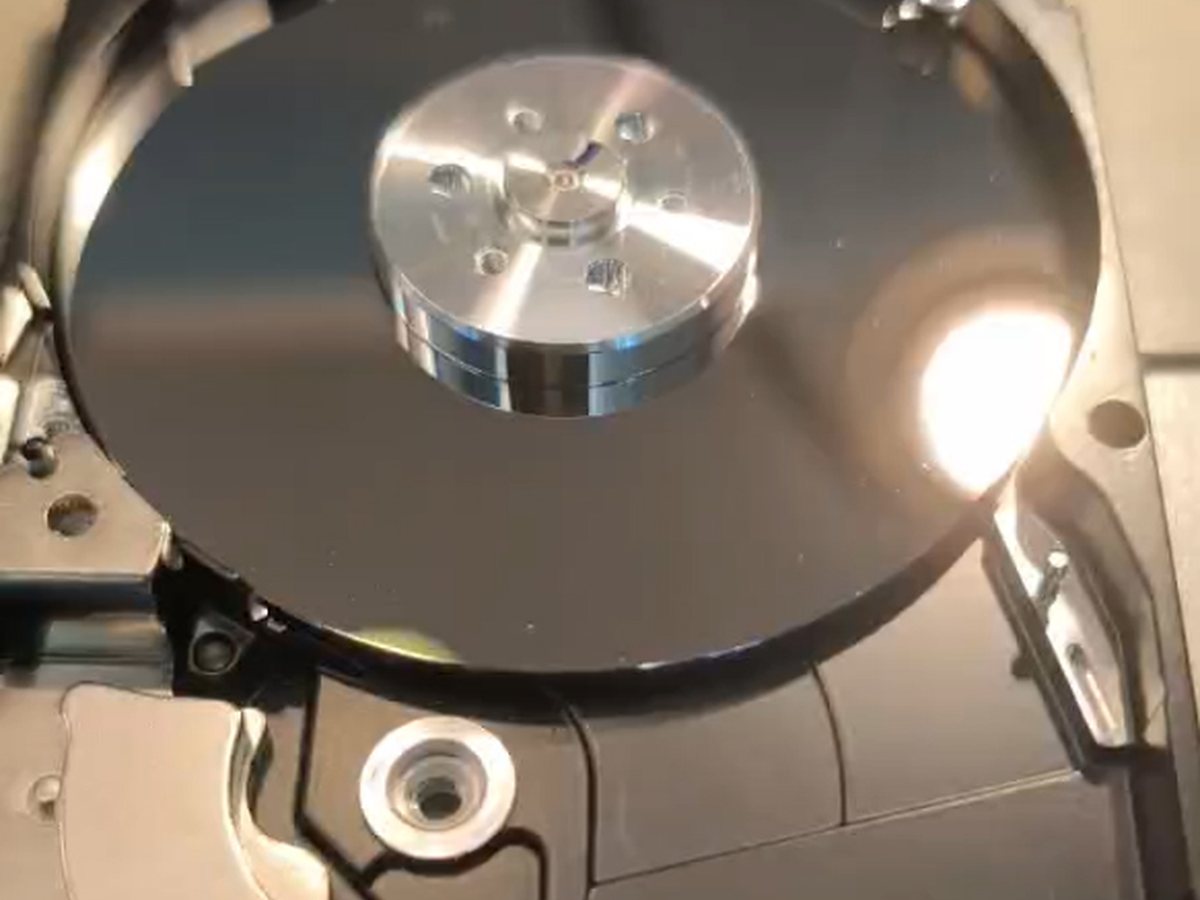
Surface 2
The final recording surface also contained widespread defects. This ruled out the possibility that one damaged platter face was preventing an otherwise usable head stack from operating.
Why Small Defects Can End a Recovery
A single localized defect does not always make a recovery impossible. In some cases, access to an affected head can be limited or disabled while readable data is acquired from healthier surfaces. The feasibility depends on the drive family, the location of the service information, the file distribution and the stability of the remaining heads and media.
This drive presented a different situation. There were not one or two isolated defects. There were hundreds across every surface. Even if the raised edges around individual damaged areas could somehow be reduced, the magnetic coating at those locations was already compromised. Data recorded in physically damaged regions could not be reconstructed simply by making the surface safer.
The damage also affected regions needed for servo positioning and access to the drive’s internal service information. A replacement head stack requires usable servo patterns to remain positioned over the intended tracks. When those patterns are disrupted across the relevant surfaces, stable reading may be impossible even before user data is considered.
Why Recovery Stopped
The final decision was based on the combined evidence:
-
The drive had already been opened and serviced before arrival. -
It clicked continuously and did not reach a stable ready state. -
Multiple controlled head replacements failed. -
Every recording surface contained widespread physical defects. -
Critical service and servo regions were affected. -
Further attempts would expose donor heads to the same damaged media without creating a reasonable path to acquisition.
At that point, continuing would not have improved the client’s chances. It would only have repeated the same failure using more donor parts. The case was therefore closed as physically unrecoverable.
Recovery Not Feasible
Inspection of the complete platter assembly confirmed widespread physical damage across every recording surface.
An Unsuccessful Recovery Can Still Be a Complete Diagnosis
Data recovery case studies often concentrate on successful outcomes: a failed component is replaced, damaged electronics are repaired or specialized imaging techniques produce the files.
Real diagnostics do not always end that way.
A responsible recovery laboratory must also determine when the physical condition of the media no longer supports a technically reasonable acquisition attempt. This case demonstrates why the absence of circular scratches should not be mistaken for healthy platters. Deep concentric scoring is only one form of media damage. Small distributed defects can be harder to recognize, harder to photograph and just as decisive.
In this WD VelociRaptor, the final answer came from inspecting every recording surface—not from the condition of the exposed upper platter alone.
Both are valid outcomes when the conclusion is supported by the physical evidence.
Have a Clicking or Previously Opened Hard Drive?
Avoid repeatedly powering it on. Continued operation can damage the recording surfaces, contaminate the internal assembly and reduce the remaining recovery options.