
Provenance & Recording History
The alleged source device, application, transfer method, exports and known processing history establish what characteristics should reasonably be expected.
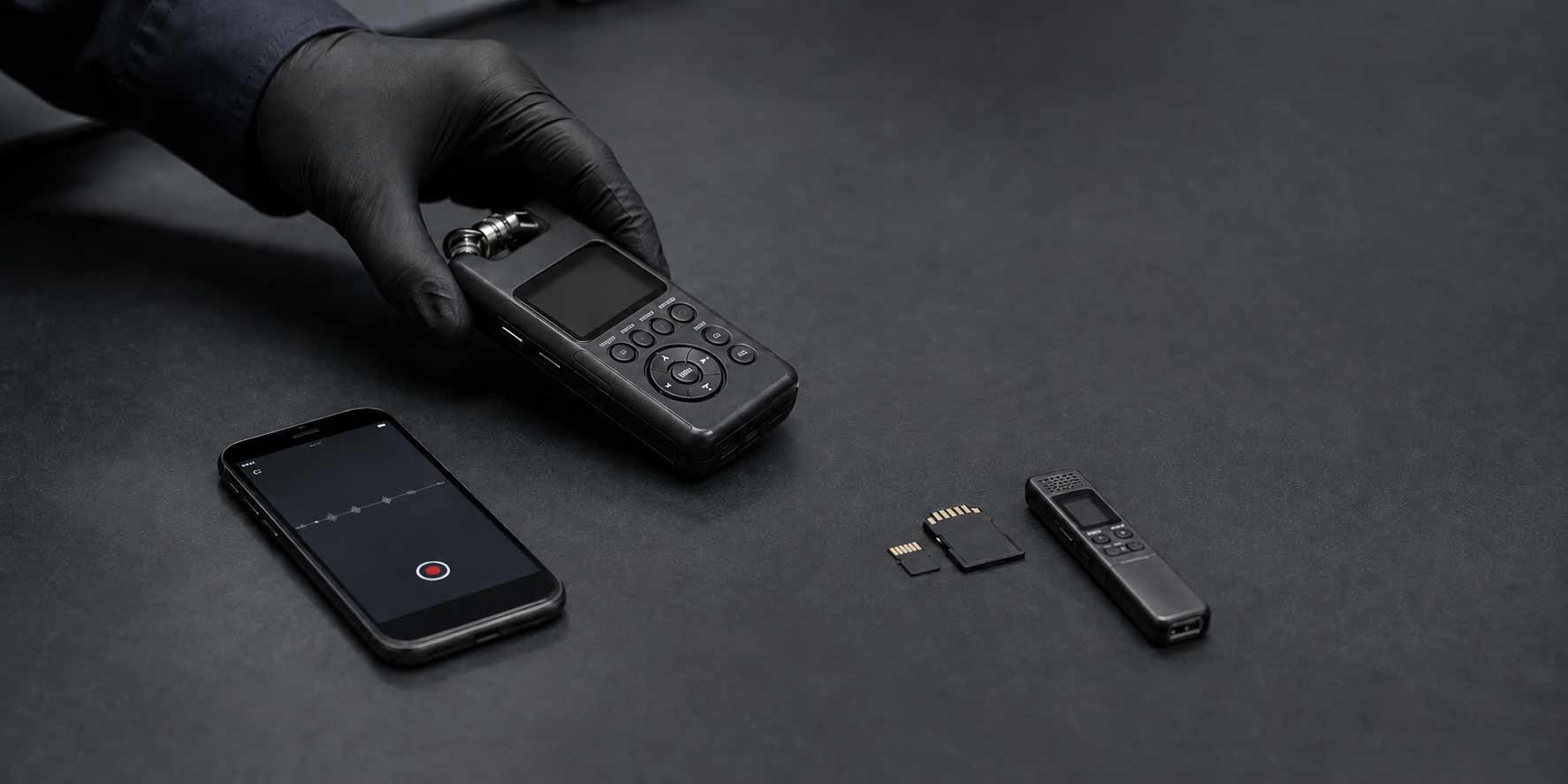
Aesonlabs examines questioned audio recordings for technical consistency, possible discontinuities and evidence of processing or modification. The examination considers the recording itself, its file structure and the circumstances under which it is alleged to have been created.
Audio authentication is not a universal test that labels every file “original” or “edited.” The examination begins with a defined claim: the device or application said to have produced the recording, whether it is represented as continuous, and what alteration or event is being questioned.
No individual test is treated as conclusive when other explanations remain technically possible.
The alleged source device, application, transfer method, exports and known processing history establish what characteristics should reasonably be expected.
File structure, stream information, timestamps, encoding parameters and software identifiers may be compared with the stated method of creation.
Questioned regions are examined for abrupt changes in amplitude, frequency content, phase, background energy and other signal characteristics.
Room tone, noise, reverberation, microphone perspective and recurring environmental sounds can provide continuity information beyond spoken content.
Compression boundaries and changes in encoding behaviour may indicate export or reprocessing, but they must be interpreted in the context of the complete file history.
Duration, sample timing, channel relationships, synchronization and unexpected interruptions may be relevant to a specific allegation.
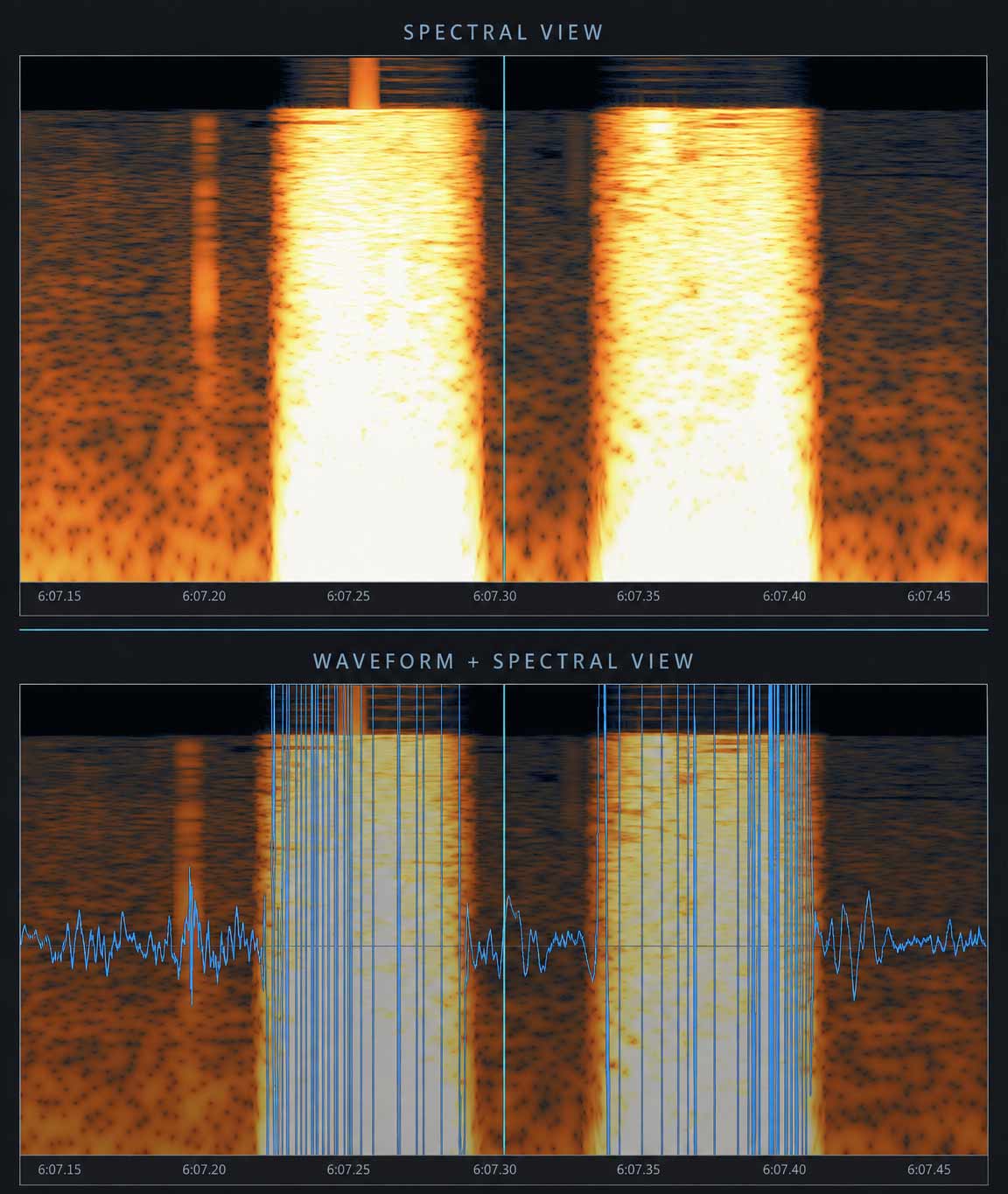
A sudden boundary may be visible across a spectrogram, waveform or both. That observation can help locate a questioned event and direct closer examination, but its meaning depends on how the recording was produced and handled.
Pausing or resuming a recorder, automatic gain control, dropped transmission data, application behaviour, microphone movement, format conversion and ordinary editing can produce different forms of discontinuity. Some may resemble one another when viewed in isolation.
For that reason, a suspected seam is compared with surrounding room tone, waveform behaviour, spectral energy, codec structure, timing and available metadata. The objective is to determine which explanations are technically supported—not to assign a predetermined meaning to one visual feature.
The submitted item is retained unchanged. Its filename, format, size, available metadata and cryptographic hash are recorded where required by the engagement.
The claimed origin, continuity, transfer history and questioned timestamps are established before technical interpretation begins.
The container, streams, codec parameters, metadata and indicators of export or recompression are examined against the stated history.
Relevant regions are evaluated through controlled listening, waveform inspection, spectral analysis and other measurements appropriate to the question.
Observations are considered together, alternative explanations are assessed and conclusions are reported with their limitations.
The strength and wording of an opinion depend on the material supplied and the specific question that can be tested.
Consistent with the alleged recording process. The examined characteristics do not conflict with the stated method of creation or continuity.
Evidence consistent with modification or reprocessing. Multiple observations may support editing, export, recompression or another departure from the alleged history.
A discontinuity with more than one possible explanation. A technical event is present, but the available evidence does not support one exclusive cause.
Insufficient information or inconclusive. A derivative copy, missing provenance or limited signal information may prevent a reliable determination.
A digital recording normally combines encoded audio with a container or wrapper. Depending on the format and application, the file may retain information about its codec, sample rate, channels, duration, timestamps, encoding library and other structural characteristics.
These details are compared with the recording history supplied for the case. A mismatch may justify further investigation, but metadata alone rarely proves who created a recording or exactly what happened to it.
Messaging applications, cloud services, social platforms, email systems and editing software may rename, strip or rewrite file information. Whenever possible, submit the original device file using a transfer method that does not convert it.

An MP3 attachment, messaging-app download or social-media copy may still contain useful information, but it can differ substantially from the original recording. Re-encoding may alter spectral characteristics, remove metadata and create new compression boundaries.
If the original device remains available, preserve it and avoid opening the questioned recording in software that may automatically resave, synchronize or modify the file. Do not rename or convert the only available copy.
The original submitted material is not overwritten. Working copies, examination notes, relevant screenshots, technical observations and limitations are maintained according to the agreed scope. When required, a report can describe the material received, the allegation examined, the methodology applied and the basis for the resulting opinion.
Court attendance, testimony, preparation for examination or cross-examination, conferences with counsel and other litigation participation are quoted separately. Audio enhancement, transcription, speaker comparison and synthetic-voice analysis are separate services unless specifically included in the engagement.
Potentially. The answer depends on the alleged modification, the recording format, the source supplied and whether the relevant technical characteristics survived copying or re-encoding.
No. A seam identifies a discontinuity that requires interpretation. Recorder operation, transmission problems, gain changes, application behaviour and format conversion may also create abrupt boundaries.
It may still be examined, but conclusions can be limited because derivative copies often lose metadata and undergo additional encoding. The original device file is preferred.
Metadata may support or conflict with a stated history, but it can be missing, rewritten or altered. It is evaluated alongside structural and signal evidence rather than treated as proof by itself.
No. An allegation involving synthetic or AI-generated speech requires a separately defined scope, suitable comparison material and an assessment of the limitations of the available methods.
Yes. The required preservation, documentation and reporting scope should be established before work begins. Admissibility remains a legal determination.
Include the source device or application, transfer history, questioned timestamp and whether formal reporting may be required.
Open an Audio Case